
Wedding Ceremony Signs: Beautiful & Helpful Ideas for Your Wedding Day
Wedding signage is easy to overdo. Scroll through enough inspiration and it starts to look like every doorway, drink station and chair needs its own custom sign. It doesn’t.
The best wedding ceremony signs do two things at once. They fit the look of the day, and they quietly answer the questions guests would otherwise have to ask: Am I in the right place? Where do I sit? What happens next? Below, we’ll cover which signs are worth making, what to write on a welcome sign, where to place your signs, which materials work best, and how to keep signage readable without letting it take over the space.
What Wedding Ceremony Signs Do You Actually Need?
The right number of signs depends on your venue layout, your guest count and how much your ceremony departs from what guests expect. A small ceremony in one space may need only a welcome sign. A wedding that moves guests from a garden ceremony to a separate cocktail hour and reception will need more help.
For every sign you’re considering, ask one question: would a guest be confused without it? If the answer is yes, the sign has a real job. If the answer is no, decide whether it adds enough beauty or meaning to earn its place.
Most ceremonies are well served by a short list:
- A welcome sign, so guests know they’ve arrived at the right celebration
- Directional signs, if guests need to choose a path or move between spaces
- Reserved seating signs, if specific rows are held for family
- An unplugged ceremony sign, only if you’re asking guests to put phones away
- A program sign, if you’d like guests to know the ceremony order or wedding party
- A memorial sign, if you’re honoring loved ones who have passed
More signage doesn’t automatically make a wedding feel more polished. Too many signs can clutter the design, repeat information guests don’t need, and add to your stationery budget. Prioritize navigation first, then important instructions, then meaningful personal touches. Add purely decorative signs last, and only where they truly add something. The Knot’s guide to essential wedding signs follows a similar priority, putting welcome, directional, seating and food and drink signs ahead of optional extras.

Wedding Welcome Sign Ideas
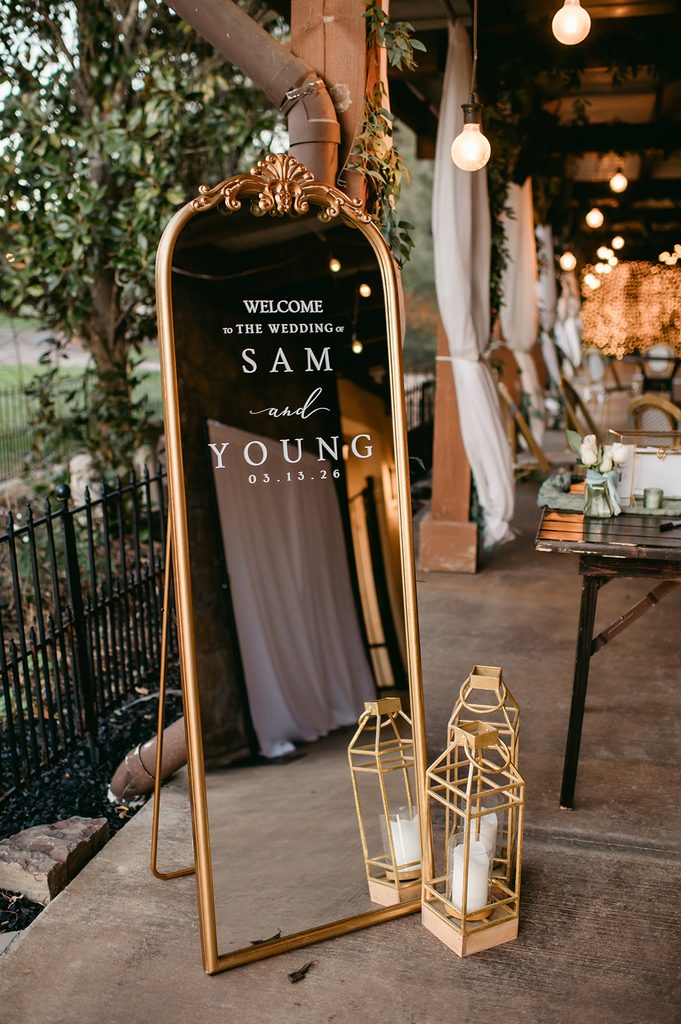
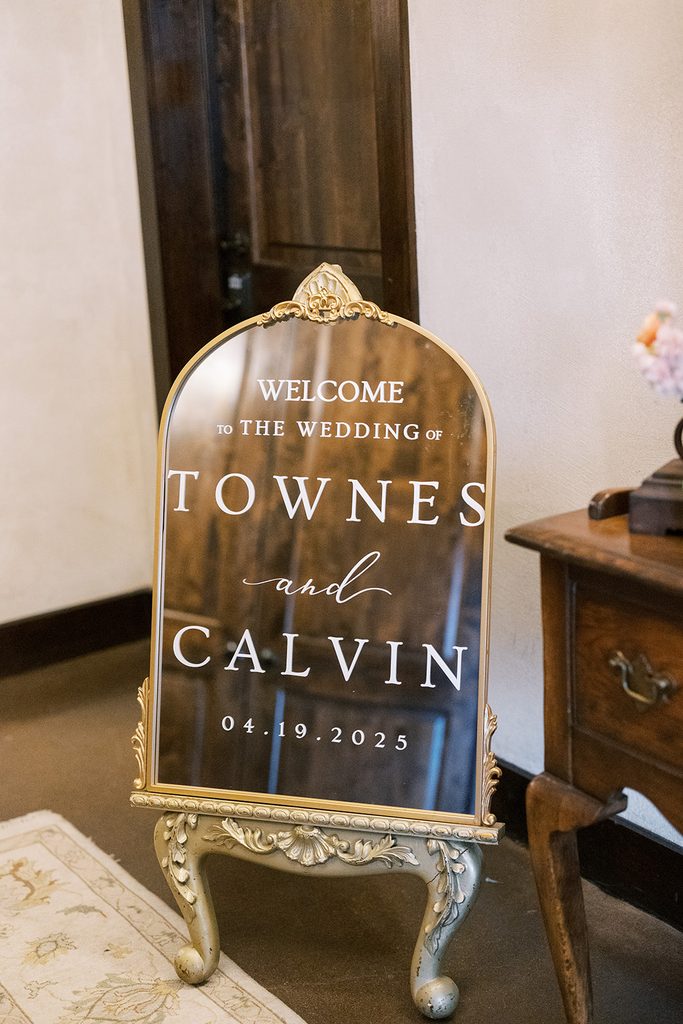
The welcome sign is usually the first piece of your wedding design guests see, and often the most photographed sign of the day. Its job is simple: confirm that guests are in the right place and set the tone for what follows.
What to Include on a Welcome Sign
A welcome sign needs very little to work well.
- Your names. This is the one essential.
- A short greeting. A few words of welcome are enough.
- Your wedding date. Optional, but it makes the sign a keepsake.
- Brief directions. Useful only if the ceremony location isn’t obvious from where the sign stands.
- A hashtag or QR code. Include one only if you’ll actually use it to collect photos or share a wedding website. Otherwise it’s clutter.
Resist the urge to add a full schedule, a quote and a monogram on top of everything else. A welcome sign is read in a few seconds while guests are walking.
Welcome Sign Wording for Every Style
Match the wording to the formality of your wedding. These are starting points to adapt.
Formal and traditional
- Welcome to the wedding of Claire Bennett and James Ortiz
- Together with their families, Claire and James welcome you
Romantic
- Welcome to our forever. Claire and James
- Thank you for being here as we begin our story together
Modern and minimal
- Claire and James. Welcome.
- Welcome. We’re so glad you’re here.
Relaxed and warm
- Pull up a chair. We’re so happy you came.
- Welcome, friends. Grab a seat and get comfortable.
If you’re not sure which tone fits, read it aloud. The right wording should sound like something the two of you would actually say to a guest at the door.

Where to Place Your Wedding Welcome Sign
Place the welcome sign where guests naturally arrive, before they reach ceremony seating. A spot just inside a ceremony entrance or along the main path works well, because it confirms guests are in the right place at the moment they’re wondering.
A few placement tips:
- Put it where people already walk. A beautiful sign tucked behind a column or off the path won’t be seen.
- Use the property entrance only when it helps. If guests park far from the ceremony, an entrance sign can be useful. Otherwise, closer to the ceremony is better.
- Use transition points at venues with several spaces. If guests pass through a courtyard or garden before the ceremony, that’s often the ideal place.
- Plan to use it twice. Many couples move the welcome sign from the ceremony to the reception entrance during cocktail hour. Ask your coordinator to add the move to the day-of timeline.
Other Wedding Ceremony Signs Worth Considering
Unplugged Ceremony Signs
An unplugged ceremony asks guests to put away phones and cameras so they can be present, and so your photographer has a clear view of the aisle. If you choose one, the sign’s job is to make the request clear without making guests feel scolded.
The wording can lean in different directions:
- Warm: We invite you to be fully present with us. Please put away phones and cameras during the ceremony.
- Direct: This is an unplugged ceremony. Please silence and put away all devices.
- Formal: The couple kindly requests that guests refrain from photography during the ceremony.
- Playful: Our photographer has it covered. Please keep your phones tucked away until we say “I do.”
A sign alone isn’t always enough. If an unplugged ceremony matters to you, ask your officiant to repeat the request before the processional. Some couples choose a middle ground and only ask for phones away during the vows. Our guide to modern wedding etiquette for guests covers unplugged ceremonies in more detail.
Reserved Seating Signs
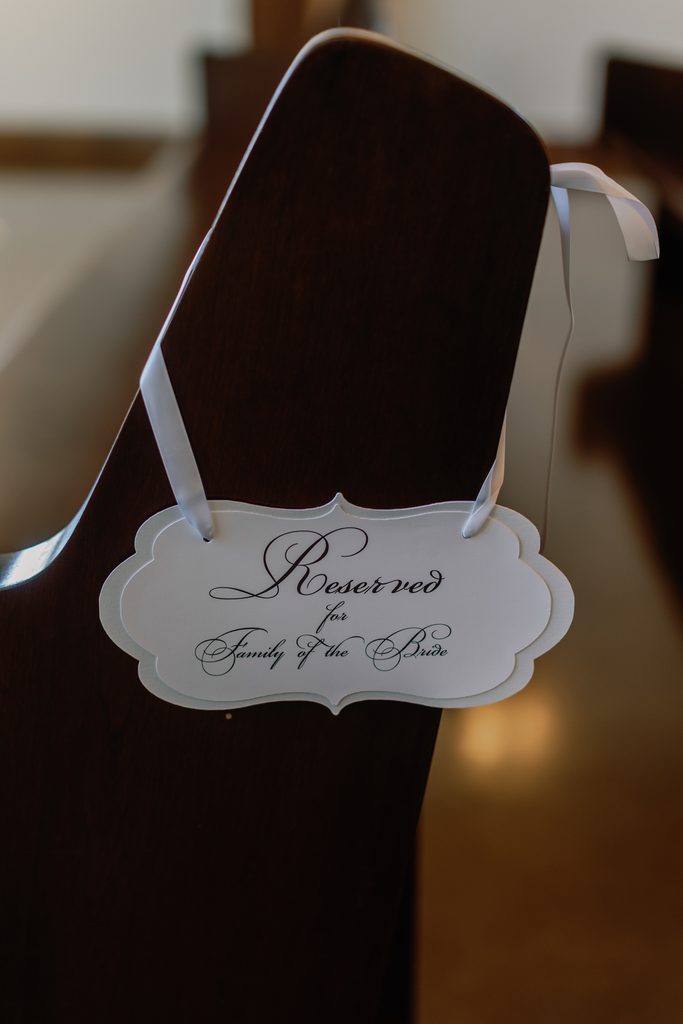
Reserved signs hold ceremony seats for the people you want closest to the aisle: parents, grandparents, immediate family or honored guests. They’re usually placed on the end chairs of the first row or two.
Keep the wording simple, such as “Reserved for Family” or “Reserved for the Parents of the Bride.” Think about accessibility too. Guests who use wheelchairs or have limited mobility may need an aisle seat or space near the front, so reserve it before the ceremony rather than sorting it out on the day.
If you’re only reserving one row, marking it clearly also tells other guests that the second row is open.
Directional Signs
Directional signs matter most when your wedding moves between spaces or guests need to choose a path. Common destinations include:
- Ceremony
- Cocktail Hour
- Reception
- Restrooms
- Guest Book
- Shuttle Pickup, if you’re providing transportation
Place them wherever guests reach a fork or a transition, not along a straight path they’d follow anyway. Readability matters more than decoration here. A simple arrow and a single word in a clear font does the job better than an ornate design.

Ceremony Program Signs
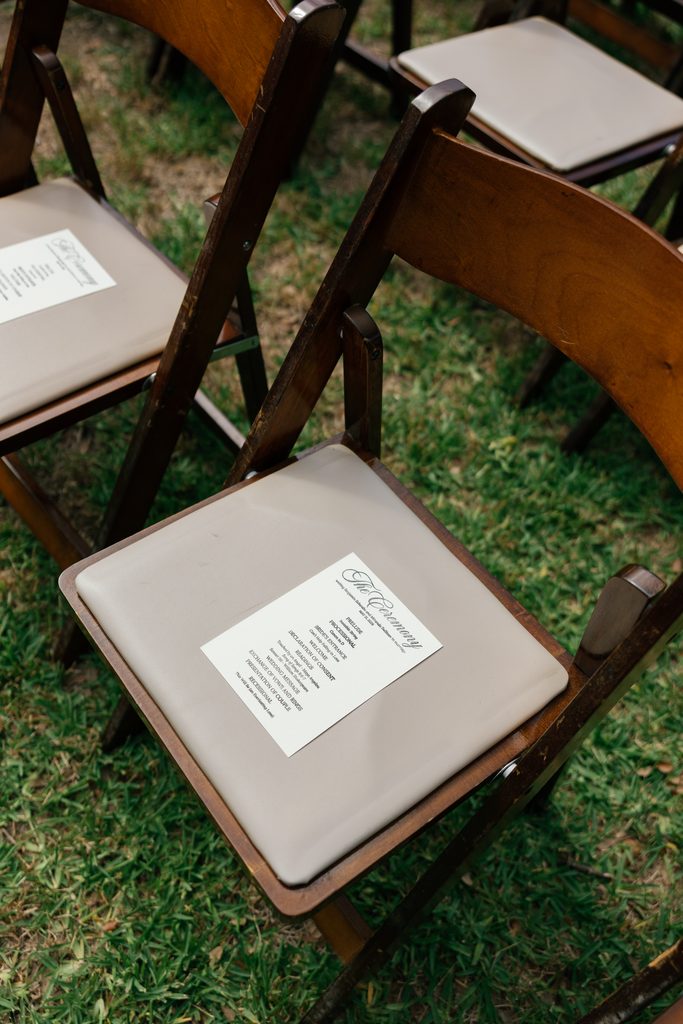
A large program sign can replace individual printed programs. It typically lists the ceremony order, the wedding party, any readings and an explanation of traditions guests may not know.
A program sign works well for shorter ceremonies and couples who want less paper. Individual programs still make sense for longer ceremonies, religious services where guests follow along, or ceremonies with several cultural traditions that benefit from a fuller explanation. If you’re still deciding the order itself, our wedding ceremony order guide walks through the traditional structure.
Memorial Signs
A memorial sign is a quiet way to honor loved ones who have passed. It might sit on a small table with framed photos, rest on a reserved chair in the front row, or stand alone near the ceremony entrance.
Simple wording is usually the most moving. A line such as “Remembering those who are with us in spirit today,” followed by names if you’d like, is enough. Keep the setting understated so the sign feels like a moment of reflection rather than a display.

Wedding Signs Beyond the Ceremony
Once guests leave the ceremony, signage shifts from welcoming and guiding to explaining what’s available. A few reception signs are genuinely useful:
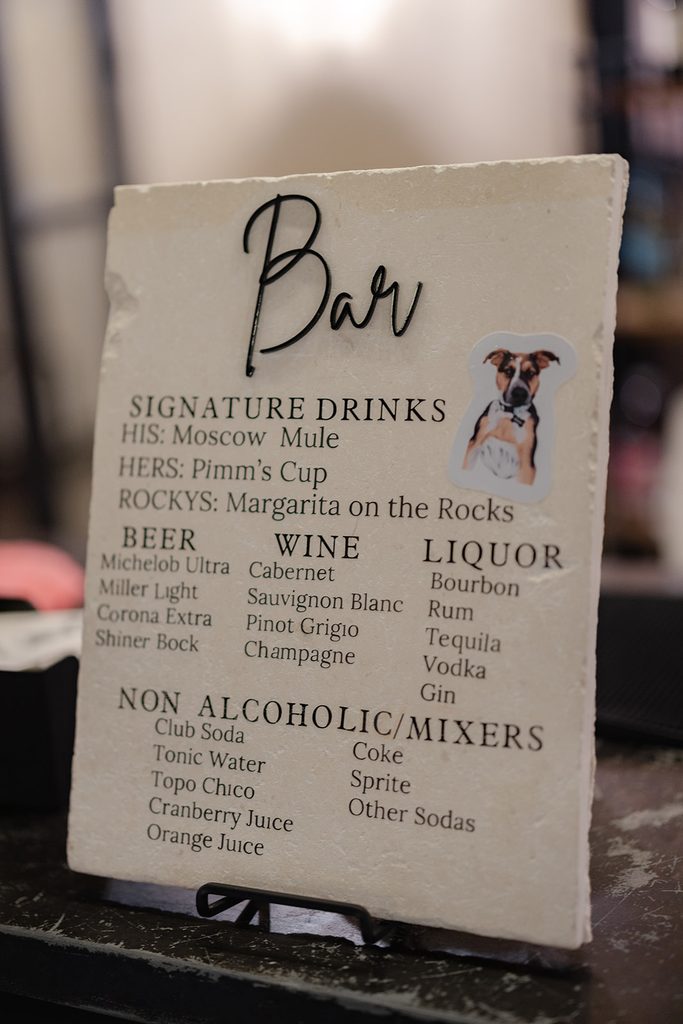
- Bar menu or signature drinks. A short drink list helps guests decide before they reach the front of the line.
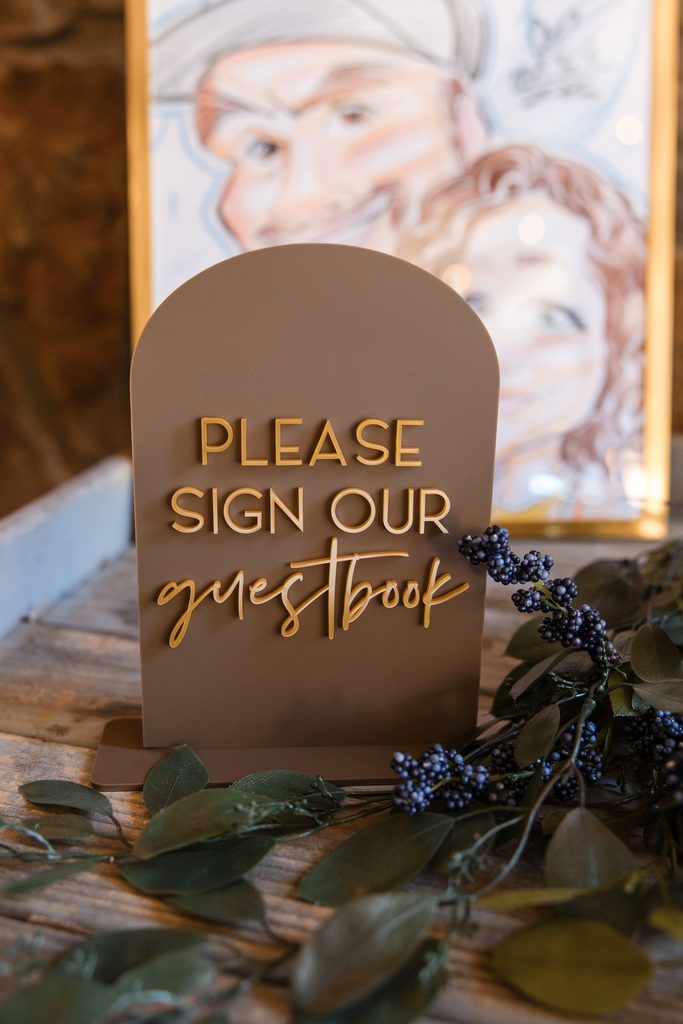
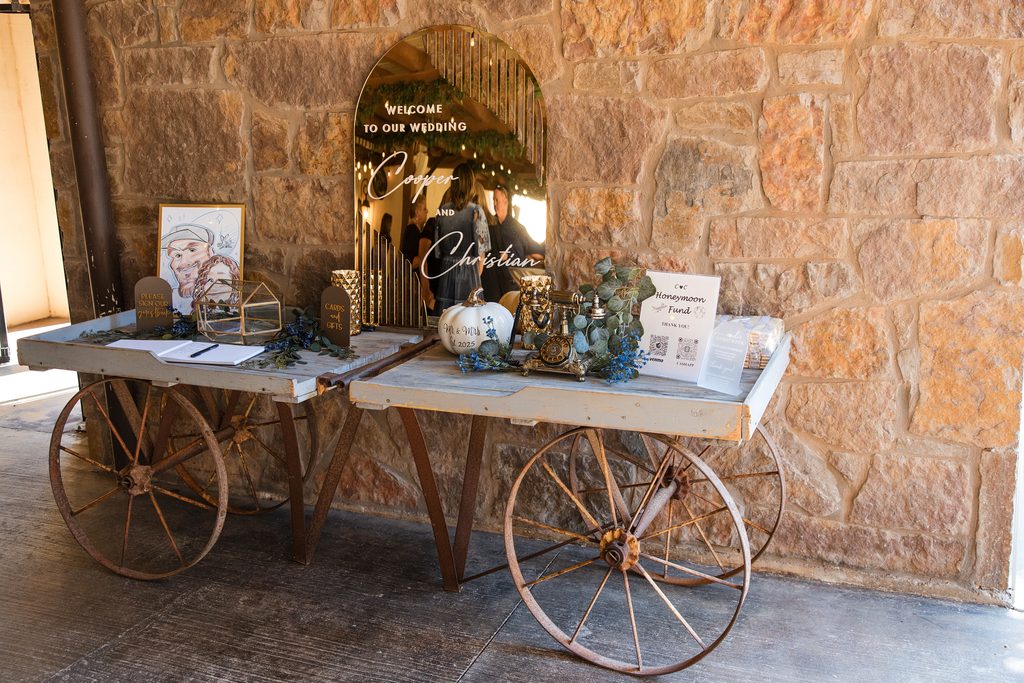
- Guest book. A sign helps when your guest book is an activity rather than a simple signature book. Our wedding guest book ideas include advice on keeping instructions short.
- Cards and gifts. A small sign keeps envelopes in one secure place.
- Dessert table or late-night snacks. Helpful when food appears partway through the evening.
- Favors. Only if favors are placed somewhere guests might miss them.
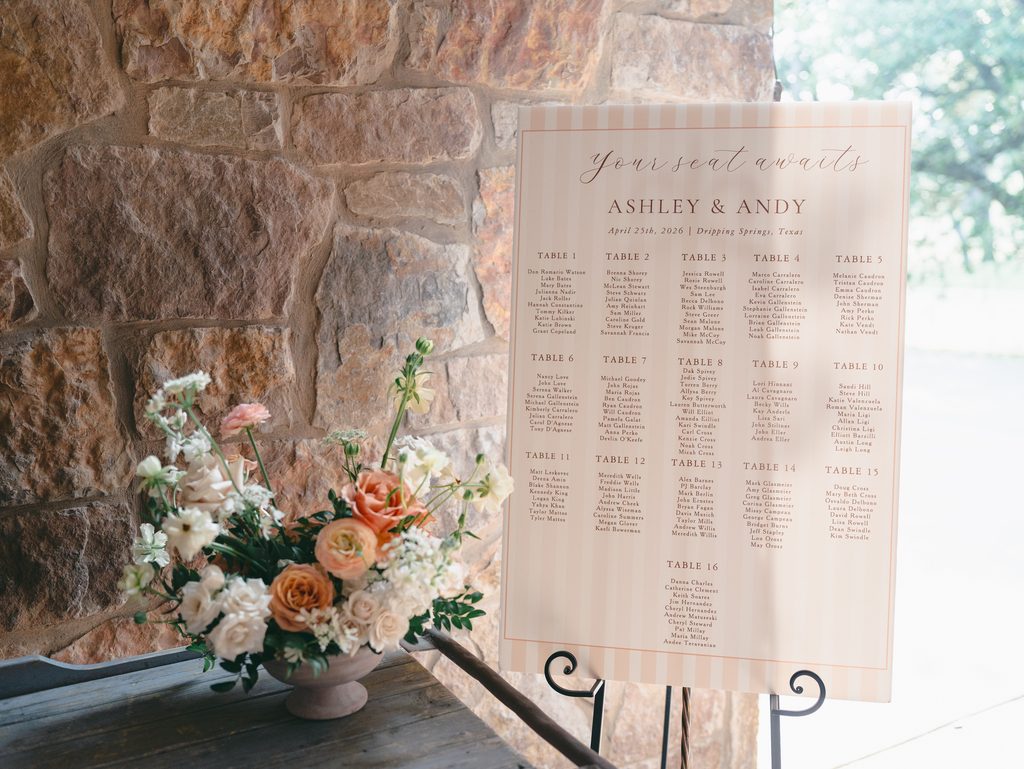
- Seating display and table numbers. These work as a pair: the display tells guests which table is theirs, and table numbers help them find it. Style table numbers as part of your wedding table decor so they don’t look like an afterthought.
If you’re working on the seating plan itself rather than the sign, read our guide to why your wedding seating chart matters.
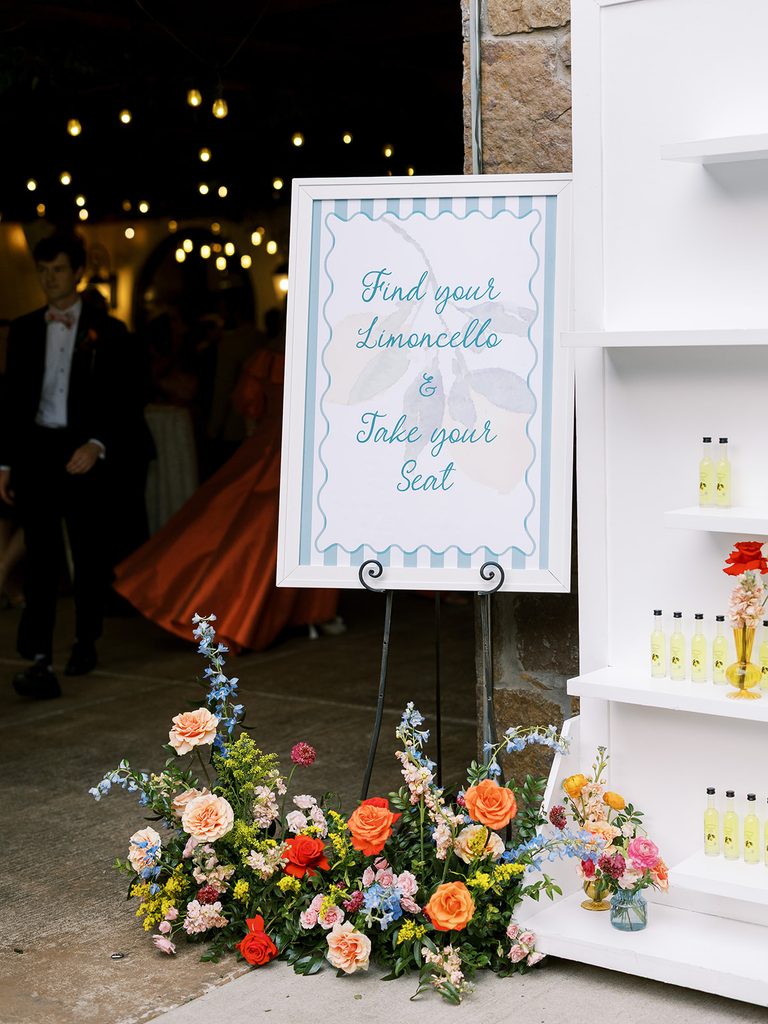


Wedding Sign Materials and Styles
No single material is best for every wedding. Each one changes how formal a sign feels, how easy it is to read and how it holds up outdoors.
| Material | Feels | Strengths | Watch for |
|---|---|---|---|
| Acrylic | Modern, clean | Lightweight, photographs well, easy to wipe clean | Glare in direct sun or under spotlights; clear acrylic needs high-contrast lettering |
| Mirror | Glamorous, formal | Reflects candlelight beautifully in the evening | Heavy, fragile, and reflections can make lettering hard to read |
| Wood | Warm, natural | Sturdy outdoors, easy to read, pairs well with greenery | Can feel rustic if the finish and lettering aren’t refined |
| Fabric | Soft, romantic | Light to transport, drapes beautifully | Needs a frame or stand; moves in wind |
| Paper or cardstock | Classic, flexible | Least expensive, easy to match to stationery | Needs a frame or backing; vulnerable to wind and humidity |
| Framed signs | Elegant, finished | A frame instantly elevates simple paper prints | Glass adds weight and glare |
| Painted boards | Artistic, personal | One-of-a-kind and often kept as a keepsake | Lead time for the artist; hand lettering must stay legible |
Whatever you choose, think about how the sign stands. Easels, freestanding frames and tabletop stands all affect how stable a sign is and at what height guests read it. Also consider who will carry it: large mirrors and framed glass need careful handling during setup and when signs move between spaces.
How to Match Wedding Signs to Your Wedding Design
Your signs should look like part of the same design as your invitations, florals and tables, not a separate décor category added at the end.
- Typography. Use the same one or two fonts as your invitation suite. Consistent lettering ties signs together even if materials vary.
- Color. Pull from your palette, usually a neutral background with one accent color. Our guide to wedding color palettes explains how to carry colors through the day without matching everything.
- Materials. Choose one primary material and repeat it. A mix of acrylic, chalkboard, wood and mirror can feel scattered.
- Florals. A small arrangement at the base or corner of the welcome sign connects it to the rest of the décor. Not every sign needs flowers.
- Setting. Look at the architecture and surroundings where each sign will stand. Gold frames echo chandeliers and antique details indoors. Natural wood or simple acrylic sits comfortably among trees and greenery.
- Formality. Match the tone of the wording and design to the rest of the day. A black-tie wedding calls for different signs than a relaxed garden celebration.
Make Sure Guests Can Actually Read Your Signs
A sign can be beautiful and still fail if guests can’t read it while walking past. Readability is where many wedding signs fall short.
- Keep script fonts for names. Flowing script looks lovely for your names, but directions and instructions are easier to read in a clean serif or sans-serif font.
- Choose strong contrast. White lettering on clear acrylic or light wood can disappear against a bright background. Dark on light, or light on dark, is easiest to read.
- Size for the viewing distance. A tabletop sign is read up close, while a welcome or directional sign needs to be read from several steps away. Before you print, view the proof on screen from the distance guests will be standing.
- Place signs near eye level. Easels and stands that lift signs off the ground are easier to read than signs leaning against a wall or the floor.
- Plan for the light. Acrylic and mirror catch glare in afternoon sun and under spotlights. Signs in dim reception spaces may need candlelight or a small light nearby.
- Plan for outdoor conditions. Hill Country wind can tip lightweight signs, and heat and humidity can warp paper. Weight easels, back paper signs with a sturdy board, and check outdoor signs before guests arrive.
Wedding Signs at Ma Maison
Ma Maison’s European-inspired architecture, oak-shaded gardens and indoor spaces already give your wedding a strong sense of place, so signage can complement the setting rather than compete with it. A gold-framed welcome sign feels at home beside antique details and chandeliers. Natural wood or simple acrylic sits comfortably among the oaks and greenery outdoors.
Because couples can hold the ceremony in one space and the reception in another, a few well-placed directional signs can help guests move easily between areas. You can see each ceremony and reception space on our venue locations page and picture where guests will arrive, gather and transition.
If you’d rather not buy every sign, Ma Maison Rentals offers acrylic and wooden signage, including welcome, unplugged ceremony, guest book, cards and gifts, and restroom signs, along with easels, table numbers and chair toppers. Renting the basics leaves more room in your budget for one or two custom pieces, like a personalized welcome sign.
Finally, plan who will set up your signs and move them during the day. Your coordinator can add sign placement and any moves, such as bringing the welcome sign from the ceremony to the reception, to your day-of timeline.


Wedding Ceremony Sign FAQs
What wedding ceremony signs do I need?
Most ceremonies need only a welcome sign. Add directional signs if guests move between spaces, reserved signs if you’re holding rows for family, and an unplugged sign only if you’re asking guests to put phones away. Everything else is optional.
What should a wedding welcome sign say?
Your names and a short greeting are enough. You can add your wedding date, and brief directions if the ceremony location isn’t obvious. Keep it short enough to read in a few seconds.
Where should a wedding welcome sign be placed?
Place it where guests naturally arrive, before they reach ceremony seating, such as just inside the ceremony entrance or along the main path. Many couples move it to the reception entrance afterward.
Do I need an unplugged ceremony sign?
Only if you’re asking guests to put away phones. If you are, pair the sign with a short reminder from your officiant before the processional.
What size should wedding signs be?
It depends on how far away guests will read them. Welcome and directional signs need to be readable from several steps away, while bar and guest book signs can be smaller tabletop pieces. Check a proof from the distance guests will be standing before you print.
Should all wedding signs match?
They should feel related, not identical. Using the same fonts, one main material and a consistent color palette is usually enough to make signs look cohesive.
Do I need both a seating chart and table numbers?
If you assign tables, yes. The seating display tells guests which table is theirs, and table numbers help them find it in the room. For help with the seating plan itself, see our guide to why your wedding seating chart matters.
See Your Wedding Details in the Real Space
A thoughtful wedding design isn’t about filling every space with décor. It’s about choosing details that make the celebration feel cohesive, welcoming and easy for guests to experience.
If you’d like to see how your signs, florals and ceremony details could work in Ma Maison’s ceremony and reception spaces, we’d love to show you around. Walk the grounds, notice where guests arrive and gather, and picture your day in the setting itself.

