
Wedding Ceremony Order: What Happens, Step by Step
Every wedding ceremony is a little different, shaped by faith, culture, your officiant and your own preferences. Most still follow a familiar wedding ceremony order, and knowing it gives you a clear starting point for planning.
The typical wedding ceremony order is:
- Processional
- Welcome and opening remarks
- Readings, prayers or a ceremony message
- Officiant’s address
- Declaration of intent
- Exchange of vows
- Ring exchange
- Unity ceremony or cultural tradition (optional)
- Pronouncement (and first kiss, if included)
- Recessional
Think of this as the basic wedding ceremony structure, not a rule. Some ceremonies skip steps, some add rituals, and some reorder the middle. Below, we’ll explain what happens at each step, share a sample wedding ceremony outline with approximate timing, and cover how the order changes for religious and cultural ceremonies.
Ceremony Order, Outline, Order of Service and Processional: What’s the Difference?
These terms are often used interchangeably, but they mean slightly different things.
- Wedding ceremony order: the sequence of events from the moment the ceremony begins to the moment you walk back up the aisle.
- Wedding ceremony outline: a planning framework that lists the main sections of the ceremony, often shared with your officiant, planner and musicians.
- Wedding order of service: the ceremony sequence itself, or the printed program that shows guests that sequence.
- Wedding ceremony schedule: the ceremony sequence with approximate timing added.
- Processional order: only who enters and in what order. Our guide to why the wedding processional still matters covers that part in detail.
The ceremony order is also different from your full wedding-day timeline, which covers everything from getting ready to the send-off. For that bigger picture, see our guide to building a wedding day timeline.
The Wedding Ceremony Order, Step by Step
1. Processional
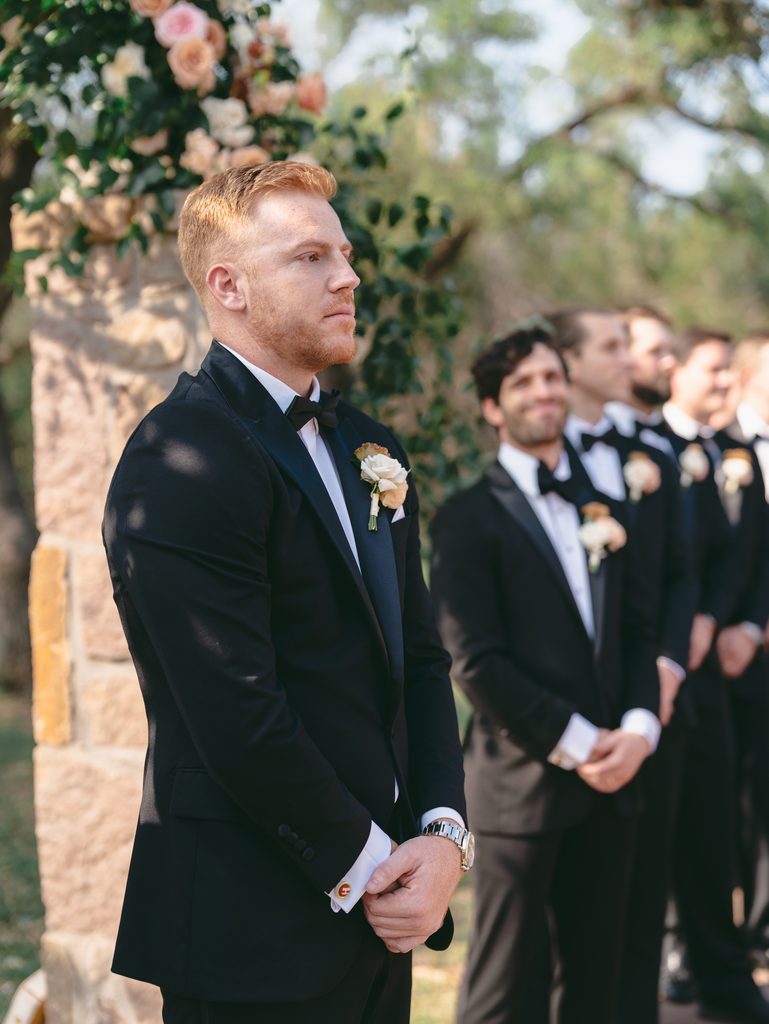
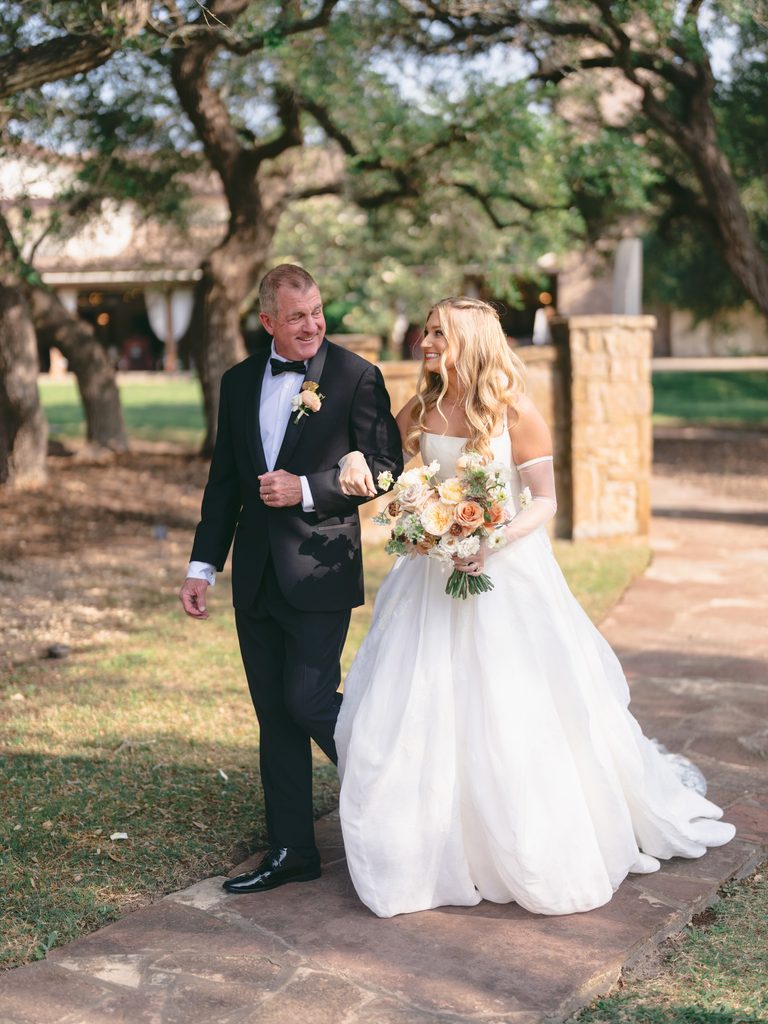
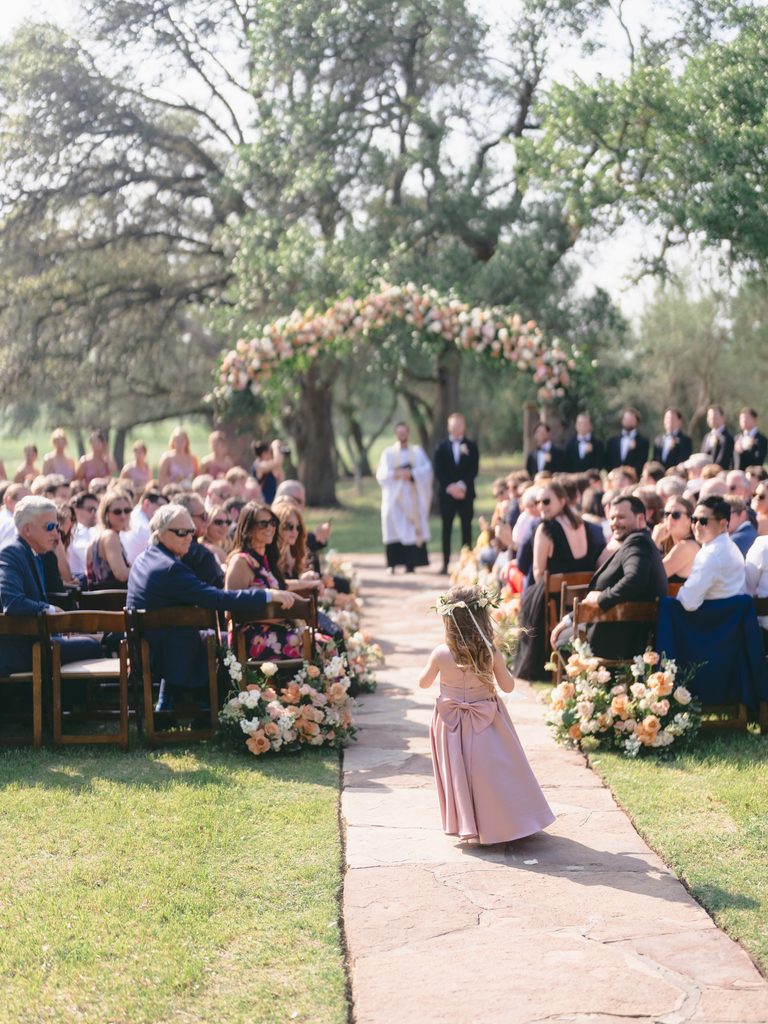
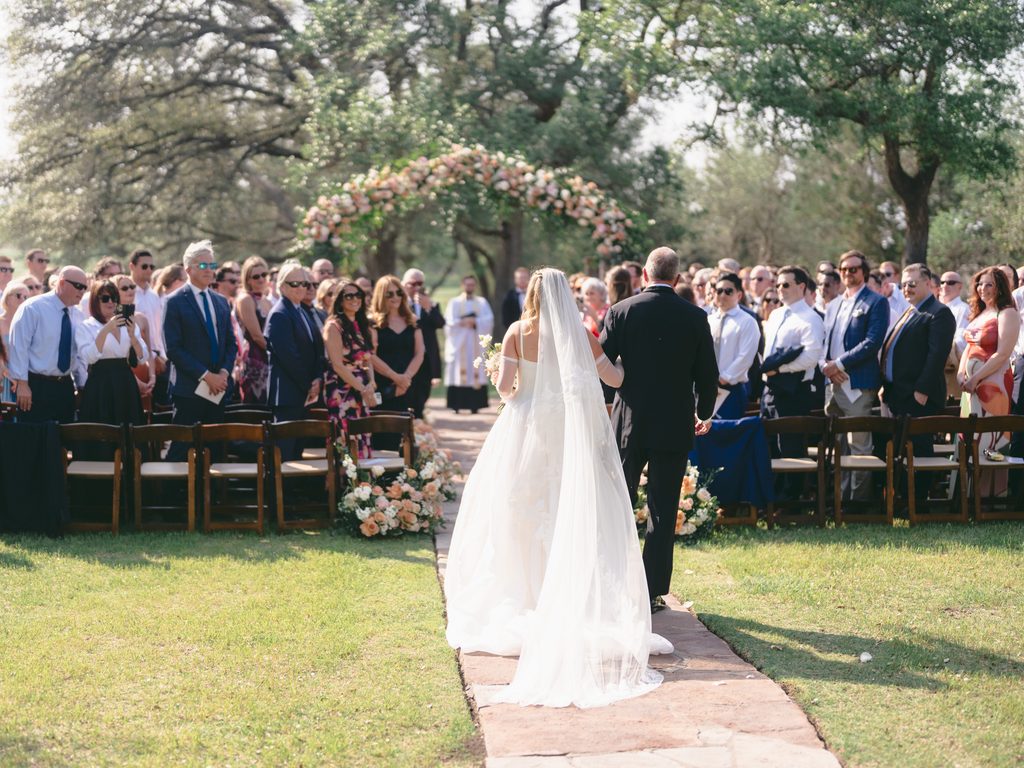
The processional marks the start of the ceremony. The officiant, wedding party, family members and the couple enter, usually to music, and take their places. Traditions vary widely in who walks and in what order, and many couples now adapt it to their families. For line-up ideas and tips on pacing, see our guide to the wedding processional.


2. Welcome and Opening Remarks
Once everyone is in place, the officiant welcomes guests and sets the tone for what’s ahead. This is often where the officiant thanks guests for coming, briefly introduces the couple, or offers an opening prayer. If you’re planning an unplugged ceremony, it’s also a natural moment for a short reminder to put phones away. Our guide to modern wedding etiquette for guests covers unplugged ceremonies in more detail.
3. Readings, Prayers or Ceremony Message
Many ceremonies include one or two readings. These might be scripture, poetry, a passage from a favorite book, a cultural or spiritual text, or a short reflection written by someone close to you. Readings are a simple way to include a family member or friend who isn’t in the wedding party. They’re optional, and some couples skip them entirely.
4. Officiant’s Address
The officiant’s address is a short message about marriage and about the two of you. It often includes how you met, what the officiant has seen in your relationship, or reflections on commitment. Unlike the welcome, which addresses the guests, the address is focused on the couple. It’s also one of the easiest parts of the ceremony to lengthen or shorten.
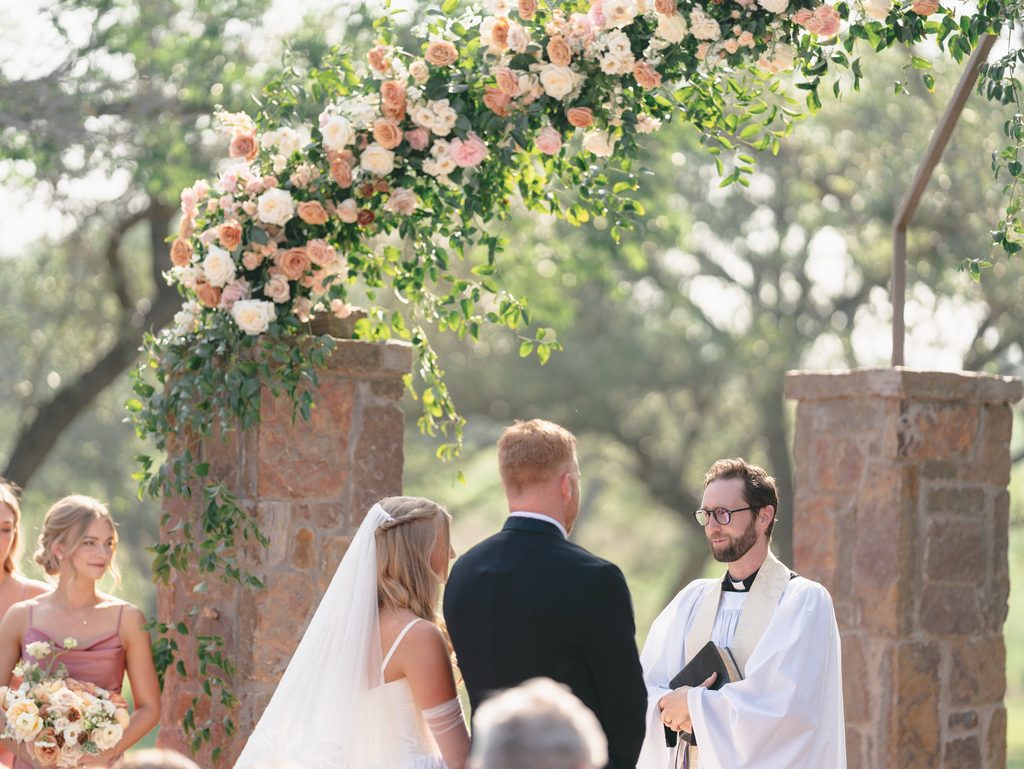

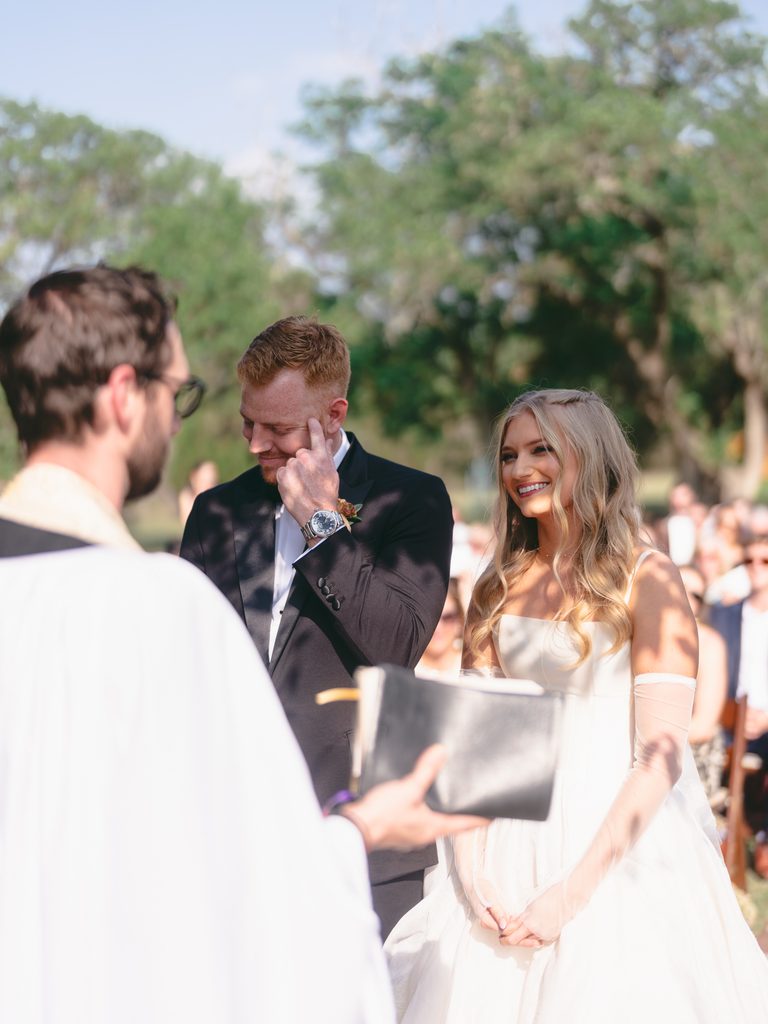
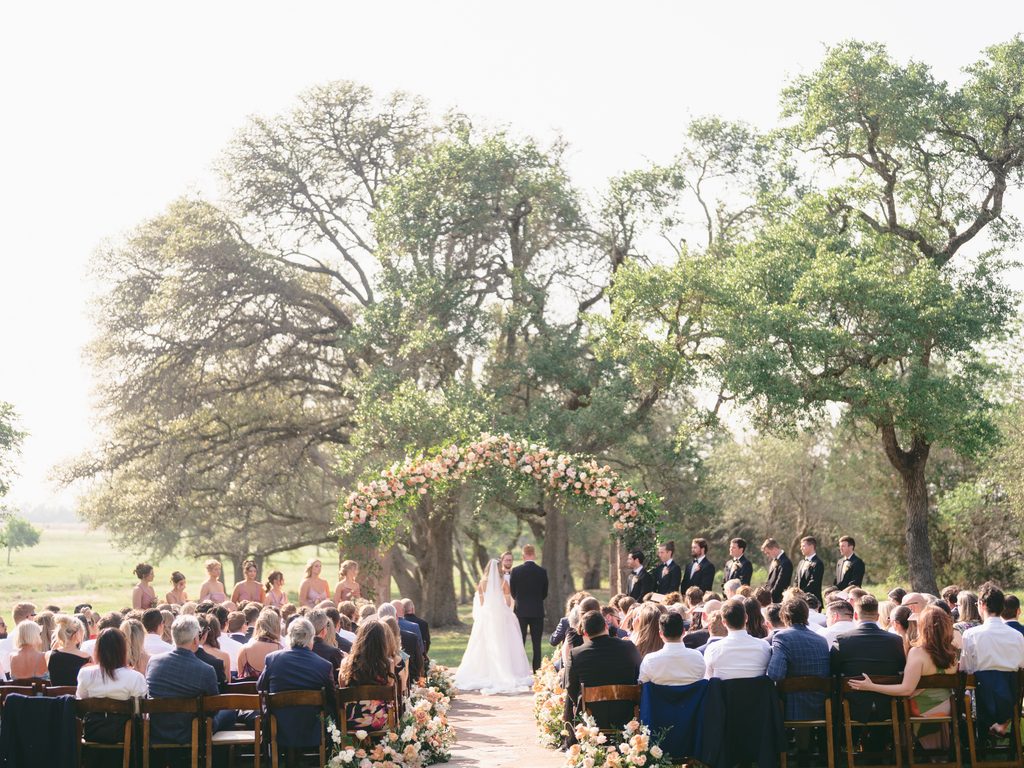
5. Declaration of Intent
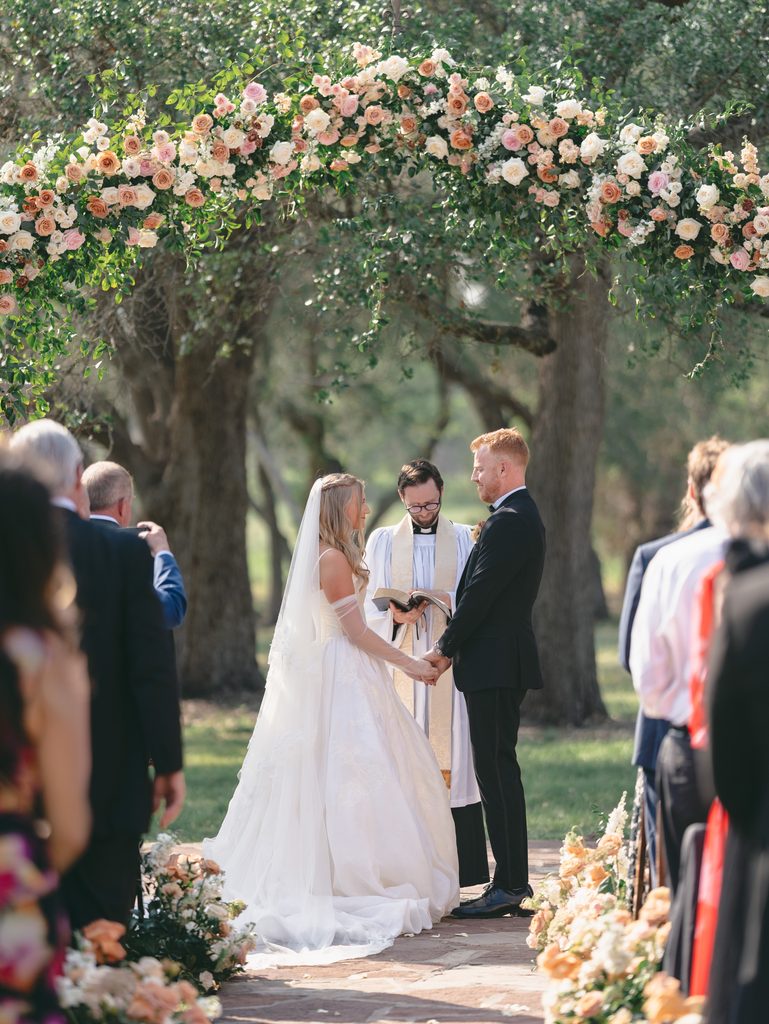
The declaration of intent is the moment each of you confirms, in front of witnesses, that you’re choosing to marry. The officiant asks a question, and each of you answers, often with “I do” or “I will.” The Knot explains how the declaration of intent differs from vows. The declaration of intent often appears just before the vows, though some officiants place it afterward. Ask yours how they structure it.
6. Exchange of Vows
Vows are the promises you make to each other. Some couples repeat traditional vows after the officiant, while others write their own. Some do both, reading personal vows and then repeating short traditional ones. If you’re writing your own, agree on a similar length, and decide whether to share them in the ceremony or privately before it, with only traditional vows in front of guests.

7. Ring Exchange
The ring exchange usually follows the vows. Each of you places a ring on the other’s finger while saying a short phrase, which the officiant often leads. The wording varies by tradition and preference. Many ceremonies use a version of “With this ring, I thee wed,” while others use a simple personal line. Decide in advance who will hold the rings until this moment.
8. Unity Ceremony or Cultural Tradition (Optional)
Some couples add a ritual that represents joining two lives or two families. Examples include handfasting, lighting a unity candle, a sand ceremony, exchanging garlands, breaking a glass, or a blessing from parents or elders. Each of these has its own meaning and its own customary place in the ceremony, so talk with your officiant and family about where it belongs.
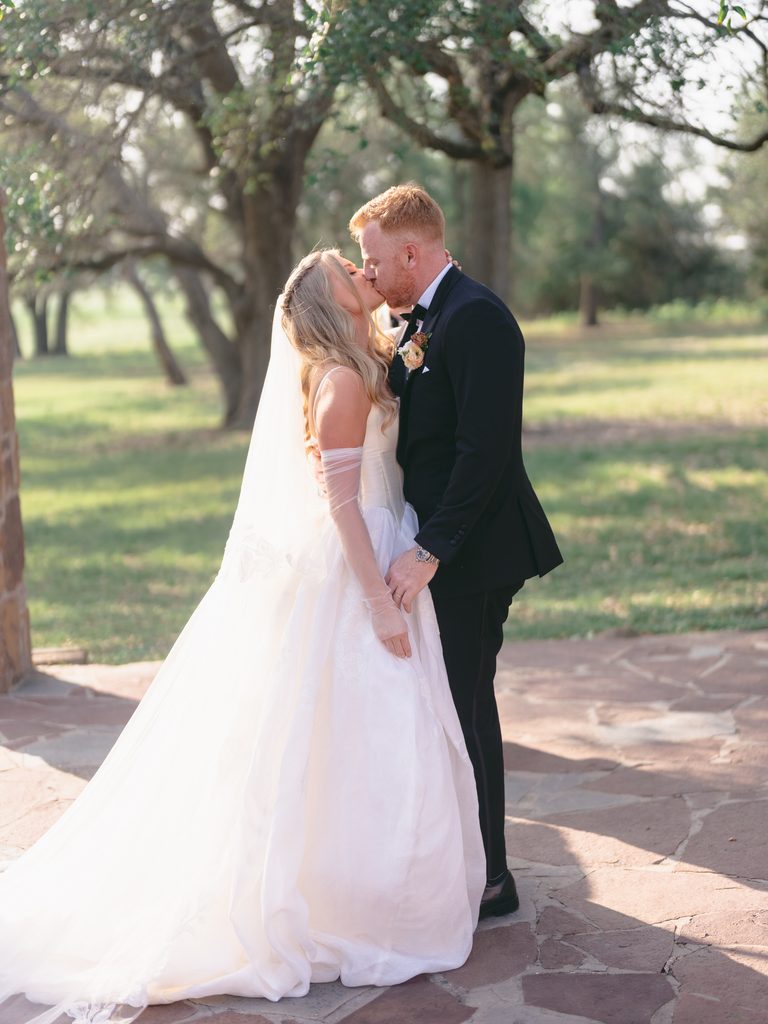
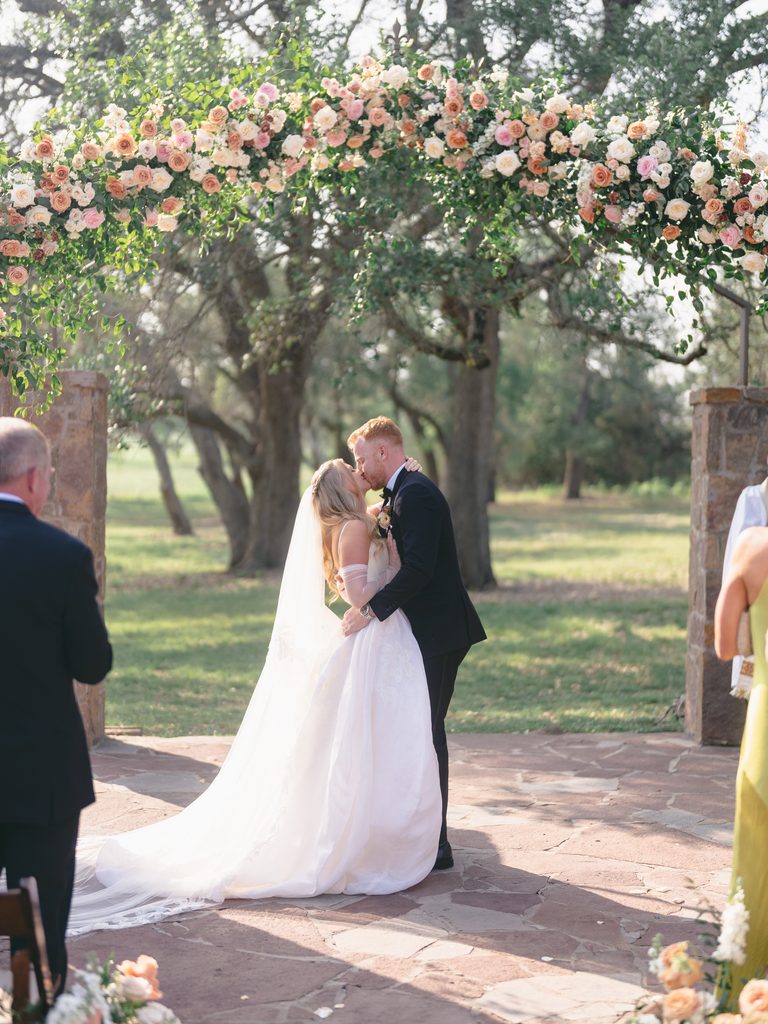
9. Pronouncement and First Kiss
The officiant formally pronounces you married. In many ceremonies, the first kiss follows, though not every tradition includes one, and the wording of the pronouncement varies. Some officiants add a closing blessing or a few final words before introducing you as a married couple.

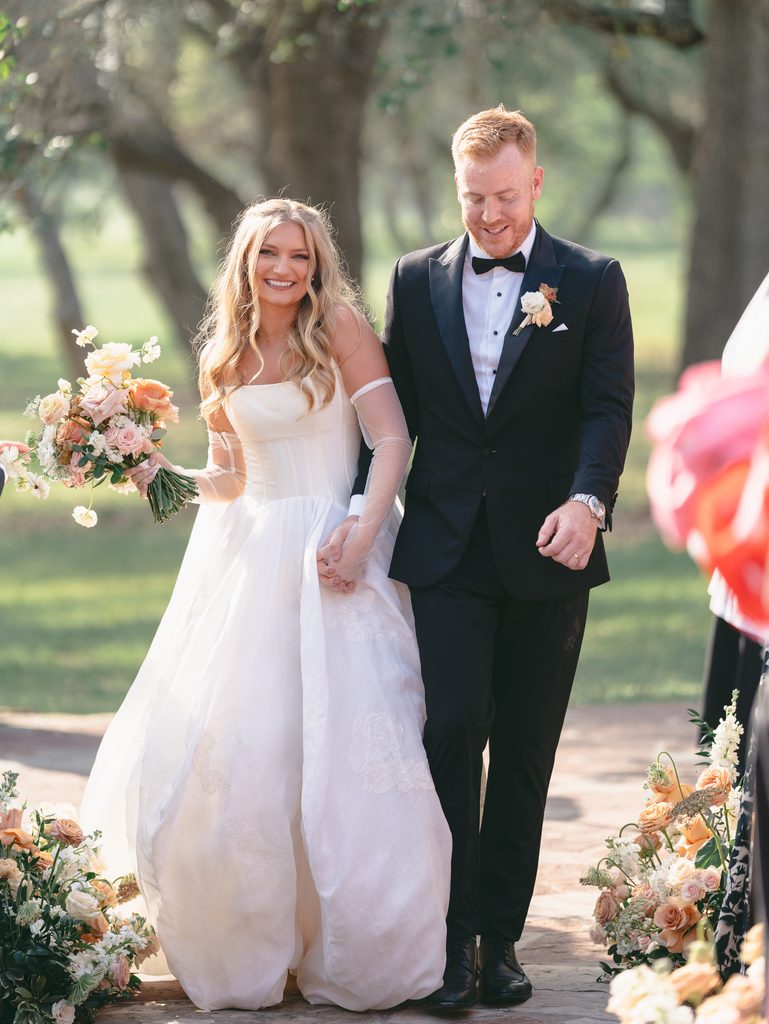
10. Recessional
The recessional is the joyful exit. You walk back up the aisle first, usually to upbeat music, followed by the wedding party, then family, and finally guests, either all at once or as directed by the officiant or coordinator. Planning how guests leave the ceremony space helps cocktail hour start smoothly.
When Is the Marriage License Signed?
Signing the marriage license isn’t usually a public part of the ceremony. Some couples handle the paperwork with their officiant shortly before the ceremony, while others step aside right after the recessional. Confirm the timing with your officiant so it doesn’t cut into photos or cocktail hour.
In Texas, a few legal steps shape this timing. According to the Texas State Law Library:
- There’s a 72-hour waiting period between when the license is issued and the ceremony, with certain exceptions.
- The license expires if the ceremony isn’t held within 90 days of issue.
- After the ceremony, the officiant completes the license and returns it to the county clerk within 30 days.
Check the current requirements with your county clerk when you apply. This is general information, not legal advice.
Sample Wedding Ceremony Outline
Here’s a sample wedding ceremony outline with approximate timing. Use it as a starting point with your officiant, planner and musicians. Actual timing depends on your traditions, readings and how long your vows are.
| Ceremony section | Approximate time |
|---|---|
| Processional | 3 to 5 minutes |
| Welcome and opening remarks | 1 to 3 minutes |
| Reading or ceremony message | 3 to 5 minutes |
| Officiant’s address | 3 to 5 minutes |
| Declaration of intent and vows | 4 to 8 minutes |
| Ring exchange | 2 to 3 minutes |
| Unity ceremony or cultural tradition (optional) | 2 to 5 minutes |
| Pronouncement (and first kiss, if included) | 1 to 2 minutes |
| Recessional | 2 to 4 minutes |
| Total | About 20 to 40 minutes |
This ceremony schedule covers the ceremony only. Plan guest arrival before it, and the transition to cocktail hour after it, as part of your full wedding-day timeline.
How the Wedding Ceremony Order Changes for Religious and Cultural Ceremonies
The order above reflects a common Western ceremony. Many faiths and cultures follow a different sequence, add rituals before or after the main ceremony, or run considerably longer. A Christian ceremony may take place within a full worship service. A Jewish ceremony often takes place under a chuppah and ends with breaking a glass. Muslim ceremonies center on the nikah, and Hindu ceremonies often include several rituals. Secular and civil ceremonies keep the legal essentials and leave the rest open, while interfaith ceremonies blend elements from more than one tradition.
The Knot’s guide to wedding ceremony order outlines several religious structures in more detail. Confirm your own order with your officiant or faith leader, and with family members who care about specific traditions.
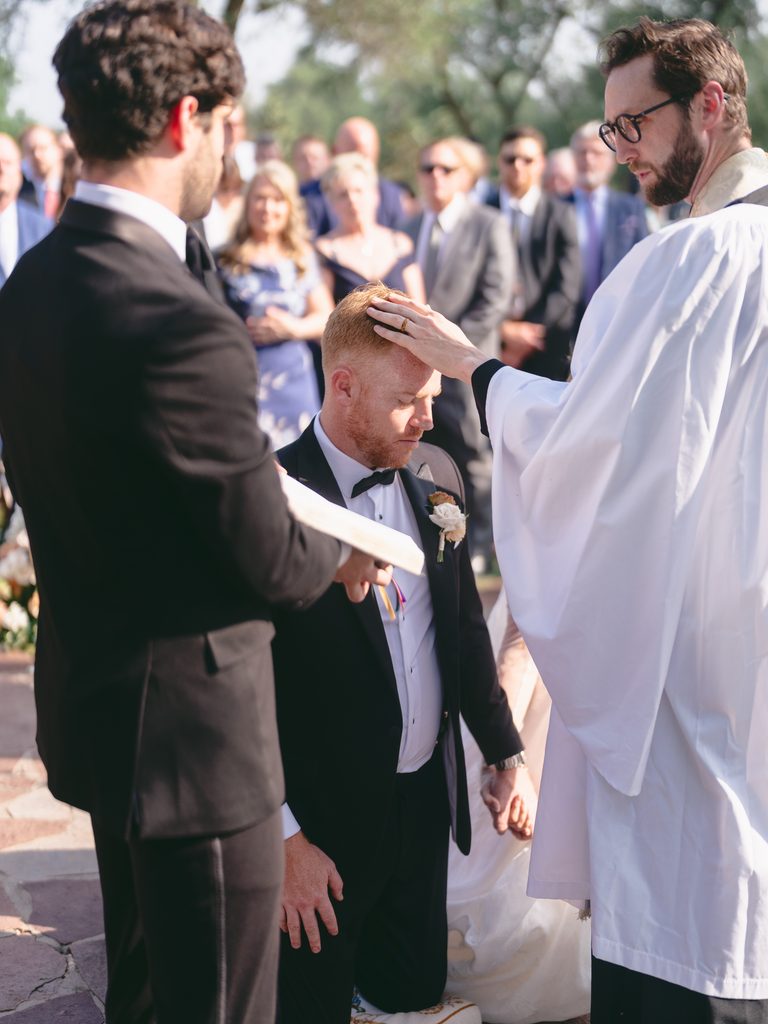
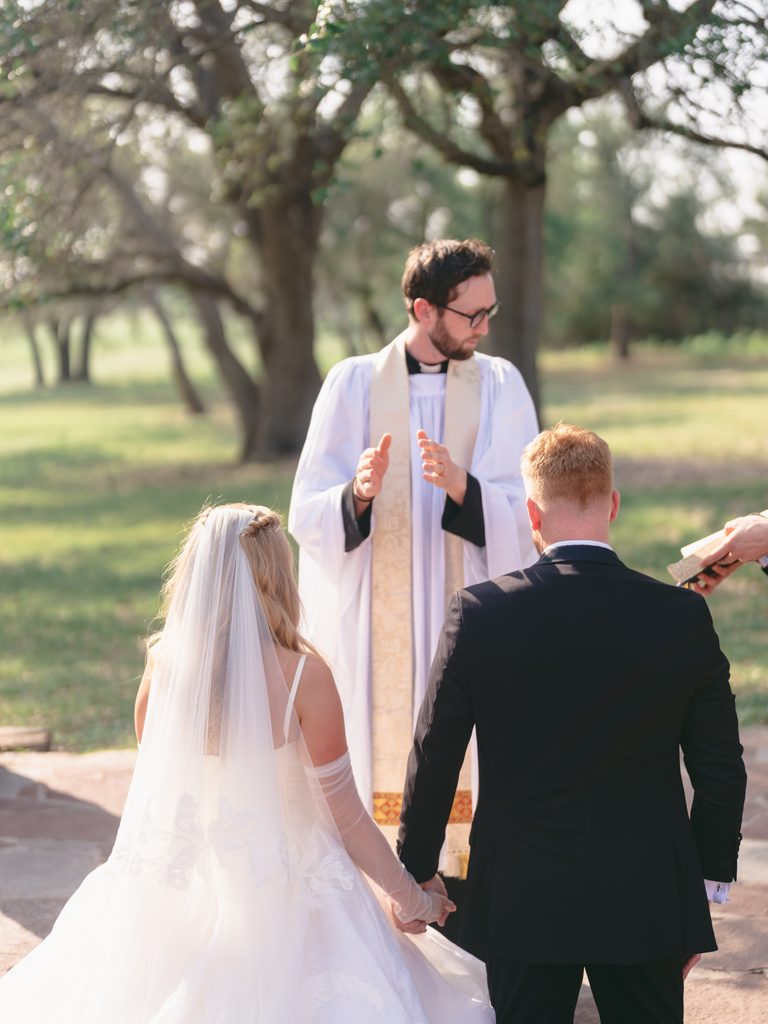
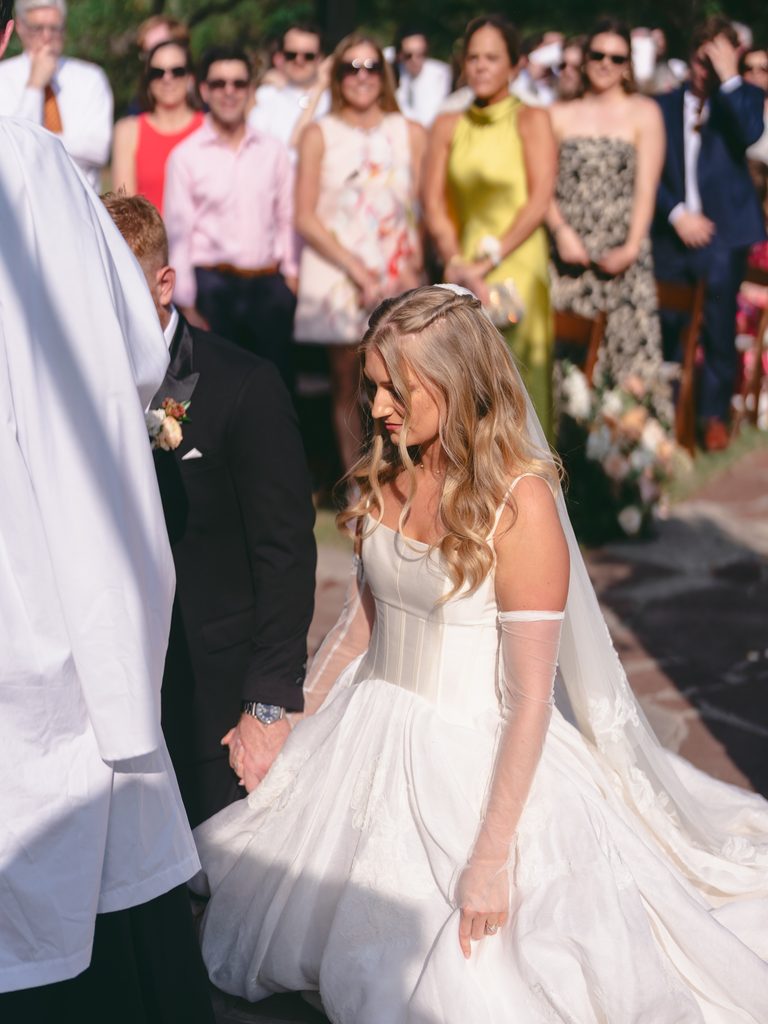
How to Personalize Your Wedding Ceremony
The ceremony order gives you a structure. What happens inside that structure is where your ceremony becomes your own.
- Write your own vows, or add a personal line to traditional ones.
- Invite family or friends to read a passage, poem or short reflection.
- Include cultural traditions such as handfasting, garlands, a tea ceremony or breaking a glass.
- Add a unity ritual that reflects the two of you.
- Choose meaningful music, including live music for the processional or a song between readings.
- Include children or pets, as ring bearers or simply as part of the processional.
- Honor loved ones with a moment of remembrance, a reserved seat or a mention in the officiant’s address.
A good rule is to personalize the middle of the ceremony and keep the opening and closing simple. Guests follow along most easily when the start and finish are familiar.
What to Discuss With Your Officiant
Your officiant is the best person to help finalize the order. Bring these questions to your first planning conversation:
- Which elements are required by your faith, tradition or the officiant themselves?
- Where will the declaration of intent happen, before or after the vows?
- Will we read personal vows, repeat traditional vows, or both?
- Will there be readings or prayers, and who will give them?
- Where should a unity ritual or cultural tradition fit?
- How long should the ceremony be?
- Who will cue the musicians and the wedding party?
- When and where will we sign the marriage license?
- How will the rehearsal work, and who will lead it?
Share your answers with your planner or coordinator so everyone is working from the same outline. If you’re deciding who stands where and what each attendant does, our guide to wedding party roles can help.
Planning Your Ceremony at Ma Maison
At Ma Maison, couples can choose from several indoor and outdoor ceremony settings, each suited to a different kind of ceremony. You can see them all on our venue locations page.
- The Green Cathedral is an outdoor ceremony space with a reclaimed antique French gazebo, surrounded by towering oaks.
- The Chapel is a climate-controlled indoor space with tall ceilings and soft natural light, suited to both intimate and larger ceremonies.
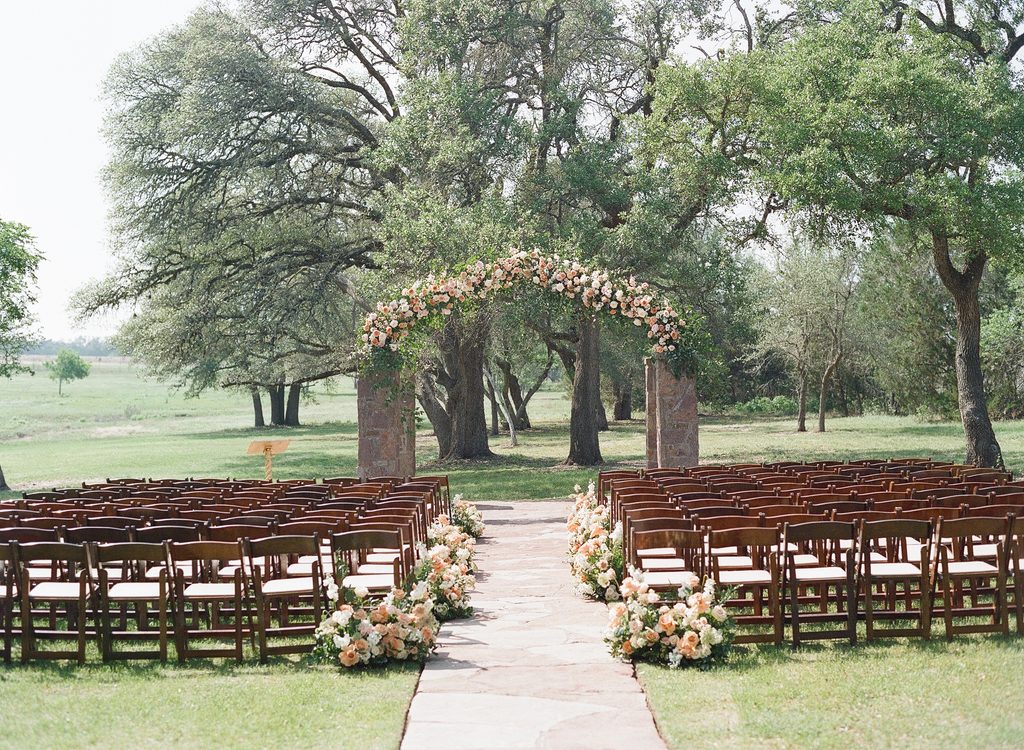
If weather changes your plans, the ceremony can move without changing its order. Ma Maison provides an indoor backup in the European Chapel or the rainproof garden Trellis at no extra cost. Rehearsals can be scheduled up to 30 days before your wedding, subject to availability, and Ma Maison asks couples to work with a professional full-service or month-of coordinator who can lead the rehearsal and keep the ceremony on cue. Details are on our frequently asked questions page.
Wedding Ceremony Order FAQs
What is the typical order of a wedding ceremony?
The processional usually comes first, followed by the welcome, readings, officiant’s address, declaration of intent, vows, ring exchange, an optional unity ritual, the pronouncement and the recessional. Many couples also share a first kiss after the pronouncement. The exact order varies by faith, culture and officiant.
Does the declaration of intent come before the vows?
Often, yes, though some officiants place it after the vows. Confirm the structure with yours.
When are rings exchanged during a wedding ceremony?
Usually right after the vows and before the pronouncement, though some traditions place them differently.
How long does a wedding ceremony usually last?
Many ceremonies last about 20 to 40 minutes. Religious ceremonies, cultural rituals, several readings or live music can make them longer.
What makes a wedding ceremony legally binding in Texas?
In Texas, you need a valid marriage license, used after the 72-hour waiting period and within 90 days of issue, and a ceremony conducted by an authorized officiant. Authorized officiants include ordained ministers and priests, rabbis, authorized officers of religious organizations, and current, former or retired federal or state judges. The officiant then returns the completed license within 30 days. The Texas State Law Library has more detail.
What is a wedding order of service?
It’s the sequence of events in your ceremony, or a printed program that shows guests that sequence.
Can we change the traditional wedding ceremony order?
Yes. Within the requirements of your faith, your officiant and Texas law, most of the ceremony can be reordered, shortened or personalized. Ask your officiant which elements need to stay.
Who walks down the aisle, and in what order?
It depends on your traditions and family. Commonly, the officiant and one partner are in place first, followed by the wedding party, then the second partner. Our guide to the wedding processional covers the options in more detail.
What is the best time of day for a wedding ceremony?
For outdoor ceremonies, many couples choose the hour or two before sunset, when the light is softer and the heat has eased. Indoor ceremonies offer more flexibility.
See Your Ceremony in the Real Space
Once you know how you want your ceremony to flow, the next step is picturing that sequence in a real setting: where the processional begins, where you’ll stand for your vows, and how guests will move to cocktail hour afterward.
We’d love to walk you through Ma Maison’s ceremony spaces so you can imagine yours.

