
Wedding Table Decor Ideas: How to Create a Reception That Feels Cohesive and Elegant
Most couples don’t struggle to find wedding table decor ideas they love. They struggle to decide which ones belong together. Save enough reception photos and the same board ends up holding taper candles, bud vases, velvet runners, gold chargers and a garland of greenery down the middle of the table.
A beautiful reception table isn’t the one with the most elements. It’s the one where a few well-chosen pieces suit the room, the color palette, the style of the day and the comfort of the people sitting there. Below, we’ll walk through how your venue and table layout shape your choices, how to build a table in layers, and how to make tables feel elevated without decorating every inch.


Start With the Venue Before You Choose the Decor
Your reception space is already part of your wedding table decor. Ceiling height, walls, floors, windows, greenery and light sit behind every centerpiece in your photos. A room with strong architecture often needs less on the table, because the setting is already doing much of the work. A plain ballroom or tent may need taller arrangements, more candlelight or richer linens to give it character.
Before choosing décor, note three things about your space: how high the ceiling is, where the light comes from during dinner, and what colors the floors and walls are. Those answers guide how tall your centerpieces can be, how many candles you’ll want, and which linen colors will look intentional. If you’re still comparing settings, you can see each of Ma Maison’s ceremony and reception spaces on our venue locations page.
Choose Your Table Layout First
Table shape decides more about your décor than most couples expect. It affects linen sizes, centerpiece shapes and how much fits once plates and glasses are set.
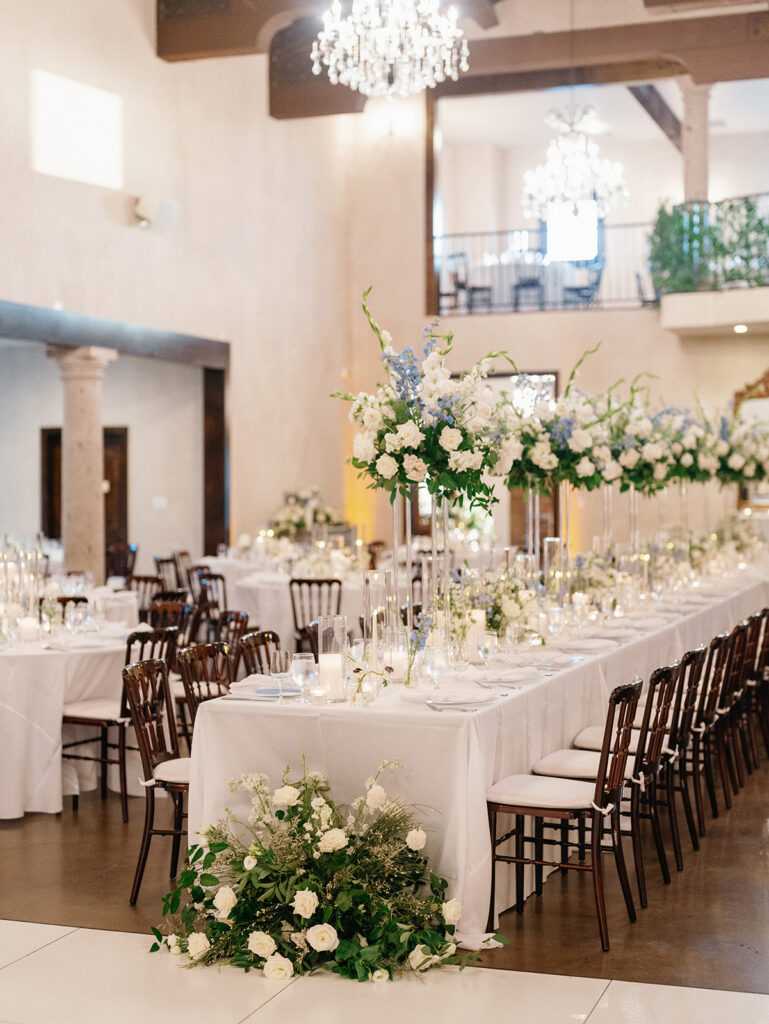
Long banquet tables create a dinner-party feel and photograph beautifully down the length of a room. They suit continuous décor: a runner, a low line of greenery, or a row of small arrangements and candles. Banquet tables are often narrower than couples expect, so measure before planning a garland or wide centerpiece.

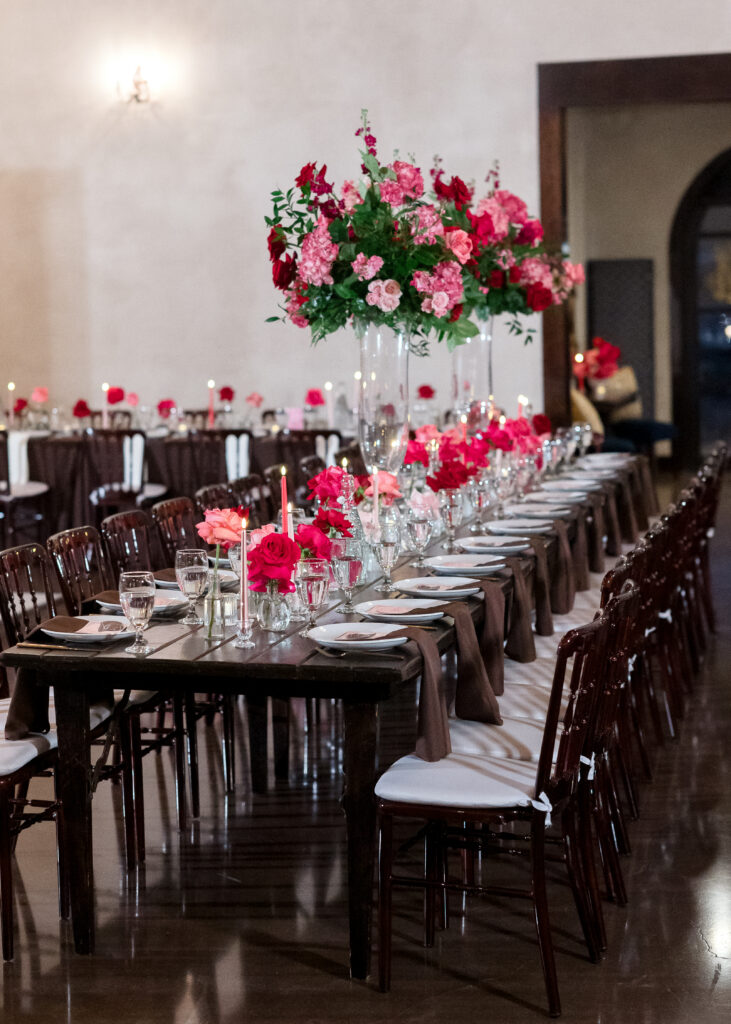

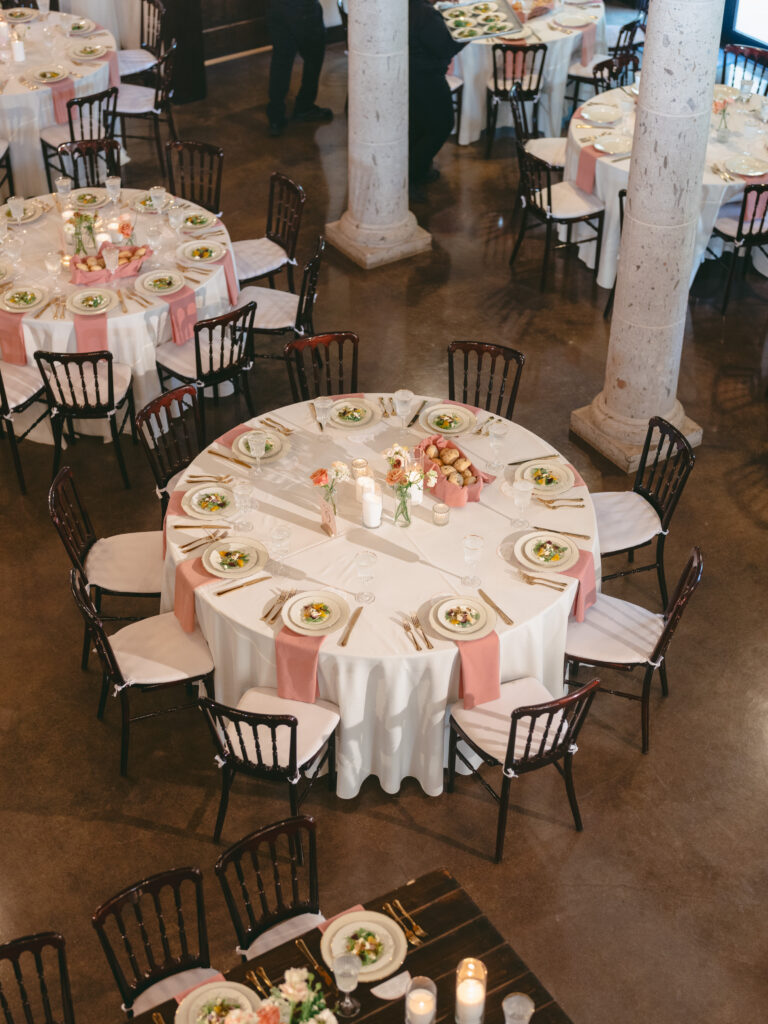
Round tables make it easy to talk across the table and seat more guests in less space. They suit a single central arrangement, either kept low or raised high enough to see beneath, surrounded by candles.
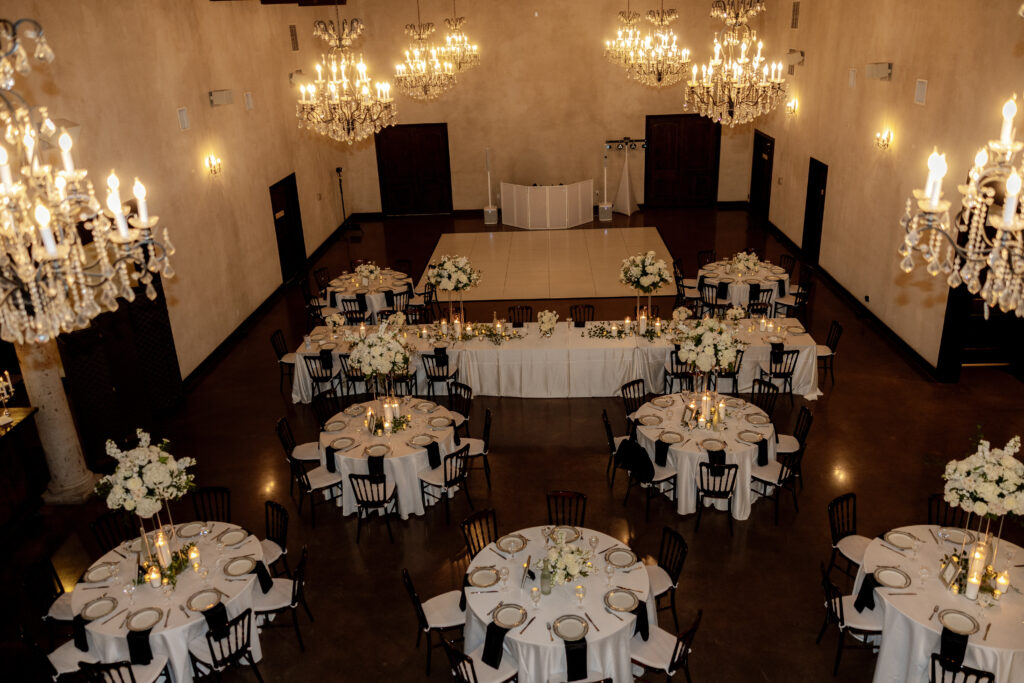
A mix of both gives a larger reception some rhythm, such as long tables through the center with rounds around them. Repeat the same linens, candles and flower varieties on both shapes so they read as one design.
Sweetheart and head tables appear in many of your reception photos, so they’re a natural place for extra florals or candlelight. Keep the front low enough that guests can see you.
Your planner and venue team can tell you which layouts suit your guest count in each space before you commit to décor.
Build Your Wedding Table Decor in Layers
Think of the table as layers that go on in order: linens, then the centerpiece, then light, then place settings, then small details. Each layer should support the one beneath it.
Linens and Table Dressing
Linens cover more of the room than any other décor element, so they shape the first impression more than small accents do. When gathering wedding table dressing ideas, start with three decisions.
- Coverage. Floor-length tablecloths feel formal and finished. A runner on its own feels more relaxed, but only works if the tables underneath are attractive.
- Texture. Linen, cotton, velvet and satin read very differently. Textured fabric adds interest to a neutral palette, and a subtle sheen catches candlelight in the evening.
- Napkins. Napkins are an easy way to introduce a supporting color without committing a whole tablecloth to it. Simple folds guests can open easily work better than elaborate shapes.
Linens aren’t included at Ma Maison, so couples rent them. Our guide to choosing linen rentals in Austin covers fabrics, sizing and what to ask a rental company. If you can, order a sample and look at it in the venue’s light.
Centerpieces and Florals
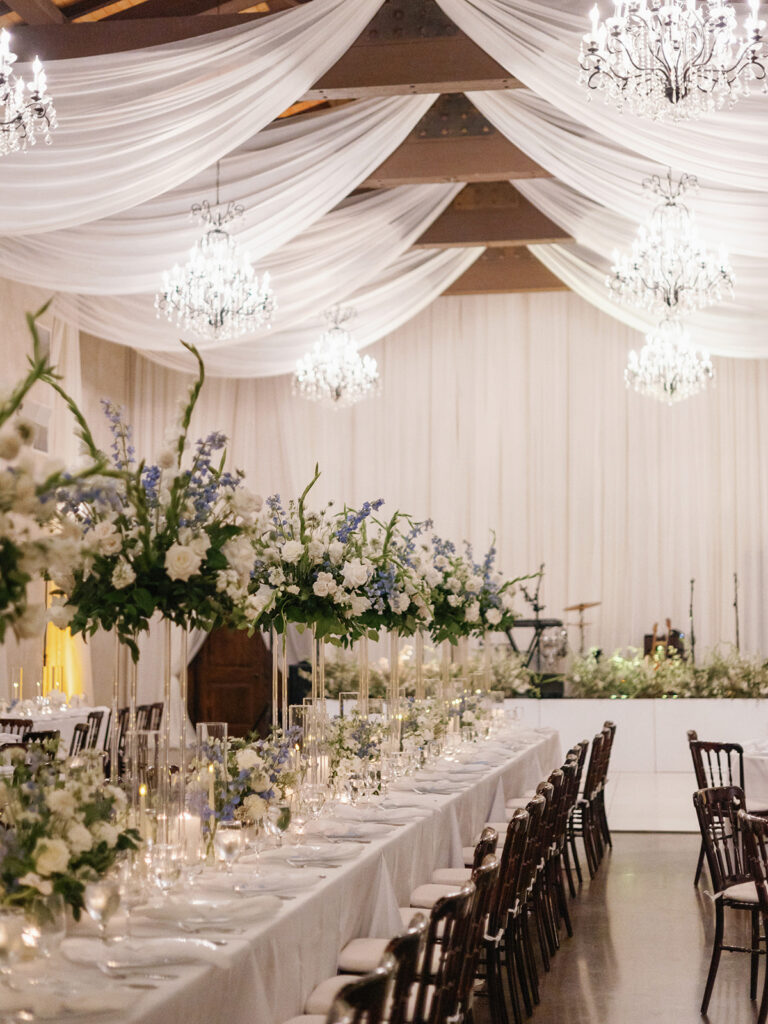
Centerpieces are usually the focal point of the table, and scale is where many decisions go wrong. Low arrangements keep sightlines open so guests can talk across the table. Tall arrangements add drama in rooms with high ceilings, and work best on slim stands that guests can see past. Many receptions mix both, and The Knot’s collection of low centerpiece ideas shows how smaller arrangements keep conversation easy.
A few habits help florals look intentional:
- Choose two or three flower varieties and repeat them, rather than a different mix on every table.
- Let greenery add volume and movement. It’s usually less expensive than blooms.
- Ask your florist what will be in season on your date, especially in summer, when delicate flowers can struggle in the heat.
- Leave room for plates, glasses and serving dishes. Family-style dinners need open space down the middle.
For budget planning, see our breakdown of the average cost of wedding flowers in Austin.


Candles and Lighting
Candlelight changes a table more than almost anything else. It warms colors, softens textures and makes glassware and metallics glow as the evening goes on.
- Tapers add height without blocking views and feel formal and romantic.
- Votives are small and easy to place generously along a table.
- Pillars in hurricanes or glass cylinders give steady light and feel substantial on round tables.
Mixing two candle types at different heights adds depth. Plan for more candles than you think, especially for evening receptions, because a few votives disappear in a large room.
The room’s own lighting is part of the design too. Chandeliers, string lights and overhead fixtures cast warm or cool light that shifts how linens and flowers look. If you can, visit the space near the time your reception begins.
Every venue has its own candle guidelines. At Ma Maison, candles are welcome with care, and the team will confirm the setup that works for your tables.
Tableware and Place Settings
Not every piece on the table needs to be decorative. White plates, clean glassware and one finish of flatware look elegant almost anywhere. Choose one or two places to make a statement and keep the rest quiet.
- Chargers frame each setting and add a metallic or textured accent, but they take up more room than you’d expect. Measure before using them on narrow banquet tables.
- Glassware depends on what you’re serving. If wine is poured with dinner, guests may need more than one glass. If you’re only toasting with champagne, fewer glasses keep the setting cleaner.
- Flatware in gold, brass or matte black can carry your metallic accent without adding another object to the table.
The Knot’s guide to wedding place settings has more on planning a setting around your space and menu. Ask your caterer and rental company what their service includes before renting extra pieces.
Stationery and Small Details
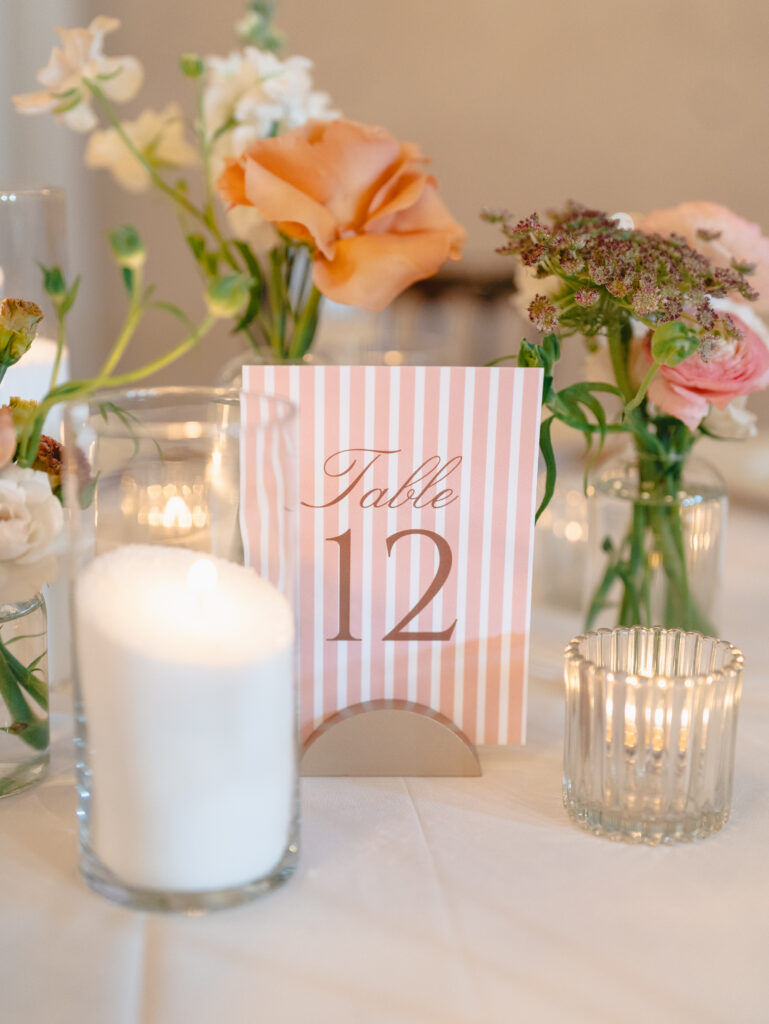
Menus, place cards, table numbers and signage carry your design into the smallest spaces. They’re also where tables most often get cluttered.
- Combine pieces where you can. A menu card can double as a place card.
- Make table numbers easy to read from a few feet away.
- Use a napkin detail, like a sprig of greenery or a ribbon, instead of adding another object.
- Include favors only if guests will actually use or eat them. A clear table looks better than one crowded with items people leave behind.

Wedding Table Decor Styles
Most wedding tablescapes fall into a handful of styles. Here’s how each one translates to the table itself: the linens, centerpieces, candles and tableware that make it recognizable.
Romantic Garden
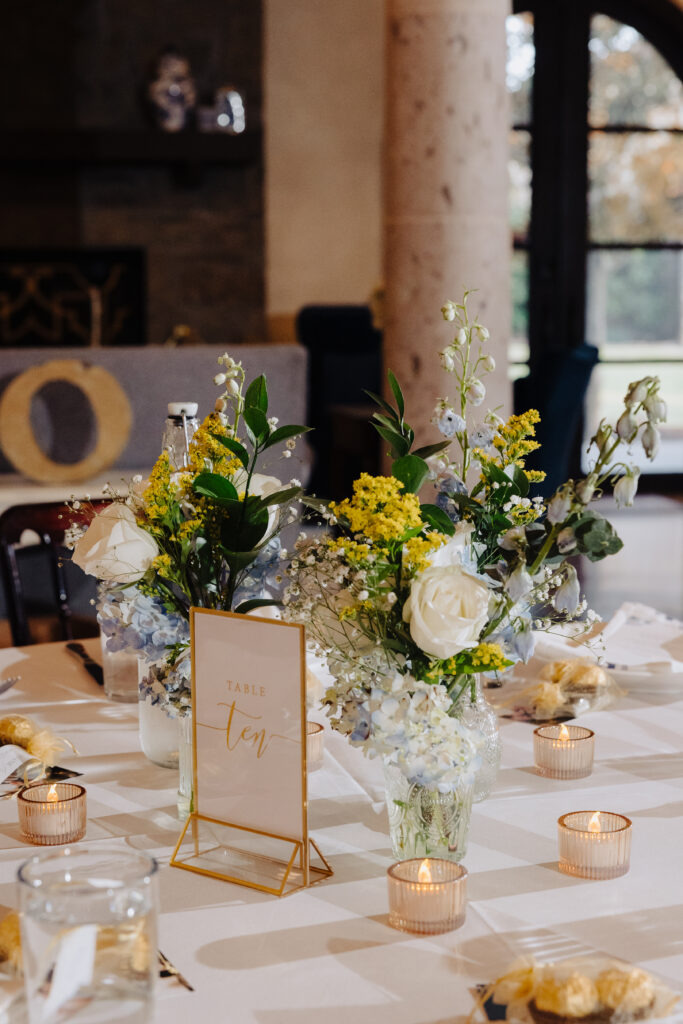
Loose, airy florals with plenty of greenery, kept low enough to talk over. Soft linen or cotton tablecloths, taper candles and delicate glassware complete it. The key is florals that look gathered rather than arranged, so ask your florist for movement and varied stem heights. This style is especially lovely on long tables, where a garden-style runner can stretch the full length.
Timeless Neutral
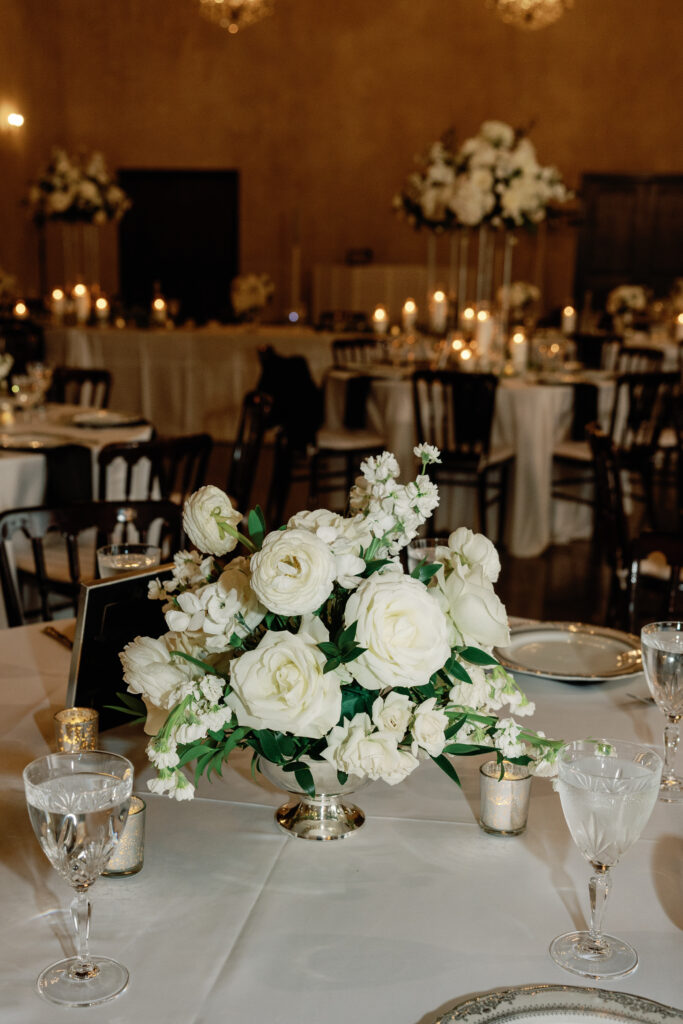
Ivory and champagne linens, white flowers, clear glass, candlelight and subtle metallics. With little color contrast, texture does the work. Pair linen tablecloths with velvet napkins, matte ceramics with crystal, and white flowers in several shapes. It suits rooms with strong architecture, where you want the setting to stay visible.
Modern Elegant
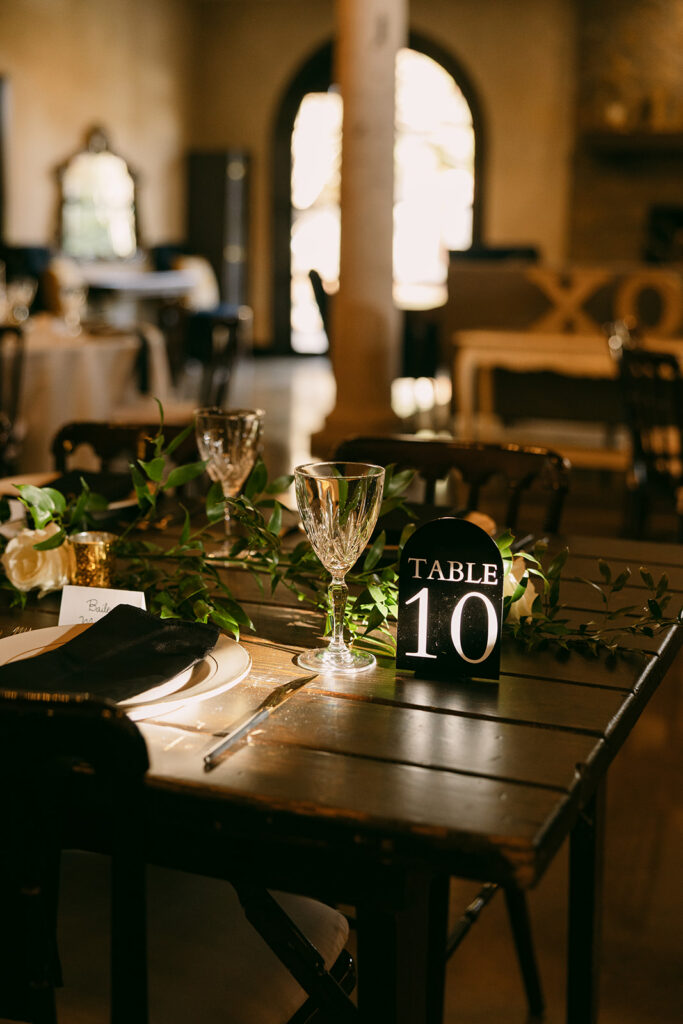
Clean-lined tableware, structured or single-variety florals, minimal stationery and strong contrast, often black and white. Restraint is the point: fewer pieces, spaced precisely. Black chargers or flatware can make the statement without adding more objects.
European-Inspired
Layered candles at varied heights, brass or antique-gold candlesticks, fine-rimmed plates, soft florals in footed vessels and calligraphy stationery. The goal is a table that feels collected rather than new. It’s a natural match for venues with old-world architecture.



Warm Hill Country
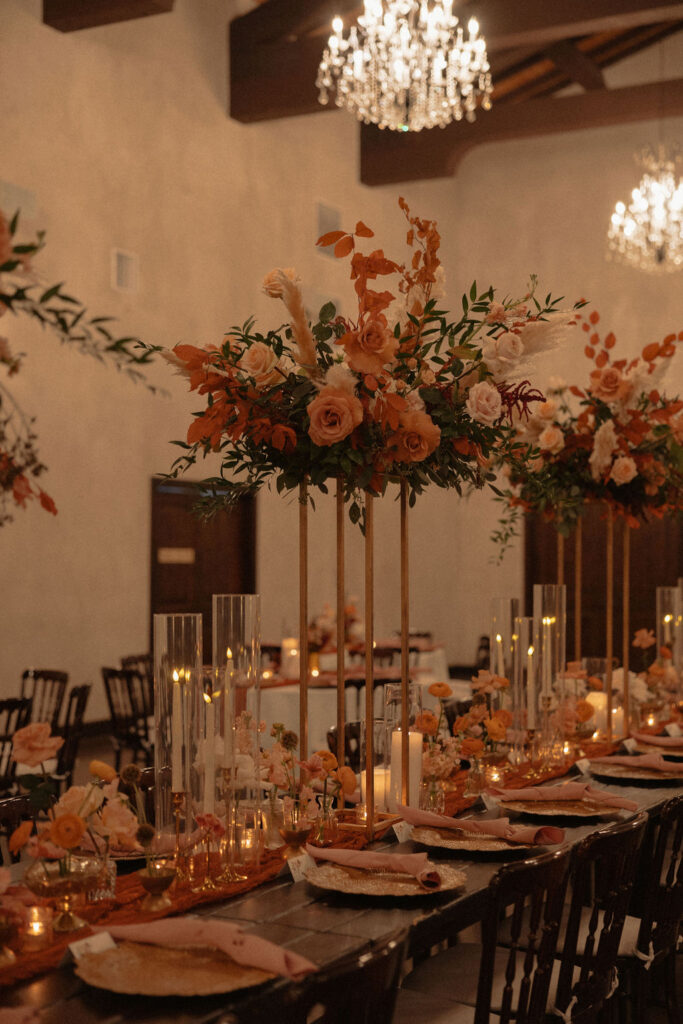
Natural textures such as linen, wood and stone-look ceramics, with brass or copper accents, olive branches or seasonal greenery, and florals in warm earth tones. To keep it refined rather than rustic, choose quality linens and polished metals over burlap and mason jars.
Moody Evening
Deep-toned florals, dark napkins or linens, abundant candlelight and metallic accents. Deep colors absorb light, so plan for more candles than you would with a light palette. Balance dark linens with clear glassware, light plates or pale flowers so the table doesn’t look heavy in photos.
How to Use Color on the Table Without Overmatching
Tables are where your wedding colors become concrete, but every napkin, flower and candle doesn’t need to match. Put your main color in one or two large elements, like florals or napkins. Repeat an accent color in a few deliberate spots. Let neutral linens, glass and candlelight cover the rest, and let flowers add natural variation in shade. Our guide to wedding color palettes covers how to choose a palette and carry it through the day.

Wedding Table Decor Ideas by Season
Season affects how your tables perform as much as how they look.
- Spring. Mild weather is forgiving for fresh flowers and lighter linens. Spring blooms suit low, loose arrangements, and pale linens keep tables feeling fresh.
- Summer. Hill Country heat is hard on delicate flowers, and taper candles can soften and lean in hot outdoor air. Choose heat-tolerant blooms, lightweight linens and candles in glass, or plan an evening reception when temperatures drop.
- Fall. Shorter days make candlelight more important by dinner. Warm textures, brass or copper, and deeper florals feel at home without leaning on pumpkins or orange.
- Winter. Early sunsets mean candles do most of the work. Heavier textures like velvet napkins and richer florals make tables feel warm and celebratory.
For any outdoor reception, plan for wind. Hurricanes or glass holders protect candles, and lightweight menus and place cards may need weighting.
How to Make Wedding Tables Feel Elevated Without Overdecorating
Elegant tables usually hold fewer elements than people expect, chosen and placed with care. Luxury isn’t measured by how much is on the table.
- Invest in one high-impact element. Decide what guests should notice first, whether florals, candlelight or linens, and make it generous. Keep everything else simple.
- Repeat materials. The same metal, glass or fabric on every table makes a room feel designed rather than assembled.
- Leave negative space. Room around each place setting looks deliberate, and guests need space for elbows, bread plates and phones.
- Vary height on purpose. A low arrangement, a few tapers and some votives create depth without clutter.
- Let the venue contribute. Chandeliers, beams and windows are part of the décor you’ve already chosen.
- Check how it photographs. If your planner or rental company can set up a sample table, photograph it from above and at seated eye level.
- Put guest comfort first. Guests should be able to see each other, reach their glass and set down a plate without moving décor.
- Skip trends that aren’t yours. A table that reflects your style ages better than one built from a trend list.
If you’re still settling on an overall design direction, our guide to defining your wedding vision can help you narrow it down before choosing individual wedding table decorations.
Wedding Table Decor at Ma Maison
Ma Maison’s reception spaces give couples different starting points for their tables.
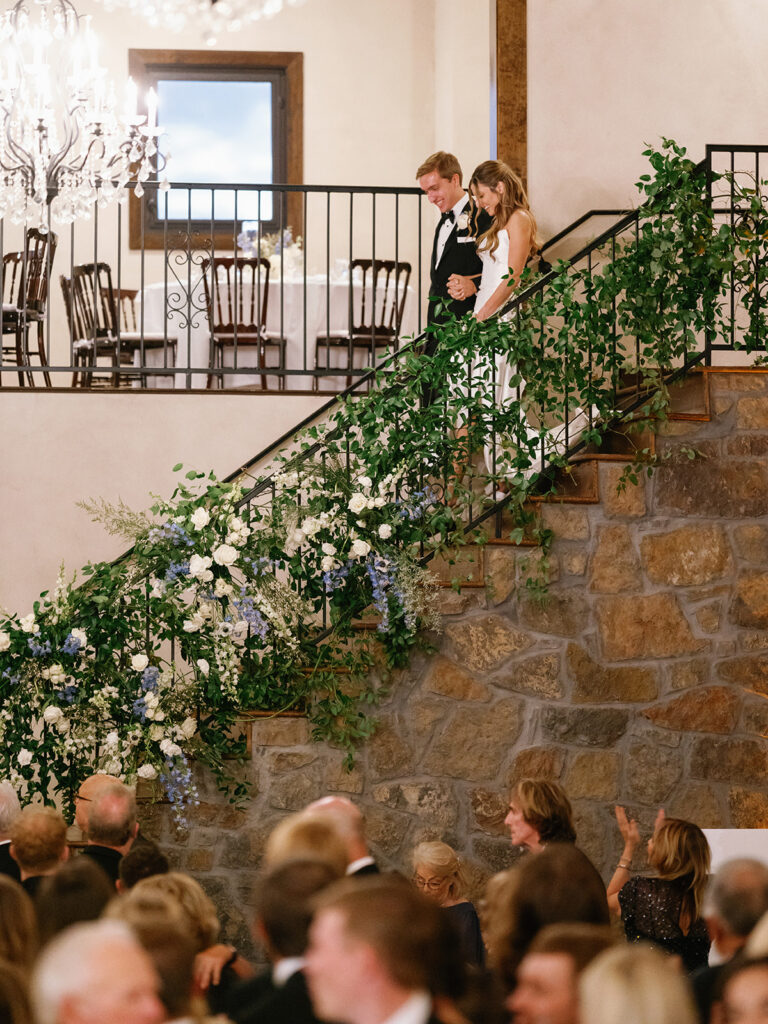
The Great Hall is a 4,000-square-foot ballroom with a neutral color scheme, antique French accents, soaring exposed beams, crystal chandeliers and a grand staircase. The chandeliers bring warm light and the high ceiling gives room for scale, so tables here can stay restrained or rise to taller arrangements without looking out of proportion. Some couples have suspended florals from the ceiling, which draws the eye upward and keeps the tables themselves clear. The neutral base suits nearly any style, from Timeless Neutral to Moody Evening.

The Trellis pairs an outdoor garden setting with indoor protection, so tables feel connected to the greenery without depending on the weather. Romantic Garden and Warm Hill Country tables feel especially at home there, because the setting supplies much of the green. It also works well for cocktail hours, rehearsal dinners and smaller gatherings, where a few well-dressed tables can carry the whole space.
Couples at Ma Maison use both long banquet tables and rounds, so you can choose the layout that fits your guest count and style. Linens aren’t included, which gives you full control over how you dress the tables. Rentals are typically loaded out at the end of the event, so confirm pickup timing with your rental company early.
A Simple Wedding Table Decor Checklist
- Note your reception space’s ceiling height, lighting and finishes
- Choose your table layout: banquet, rounds or a mix
- Confirm your color palette: main, supporting and neutral colors
- Choose linens, runners and napkins, and order a sample
- Decide on centerpiece height and two or three flower varieties
- Plan candles: types, quantity and holders
- Choose plates, chargers, glassware and flatware
- Finalize menus, place cards, table numbers and signage
- Check the venue’s candle and setup guidelines
- Do a final spacing check with a full place setting on the table
Frequently Asked Questions
What should be included in wedding table decor?
Most reception tables need linens, a centerpiece, candles or other lighting, place settings, and a few stationery pieces like table numbers, menus or place cards. Linens and centerpieces usually make the biggest visual impact, so prioritize those first.
How do I decorate wedding tables without making them look cluttered?
Choose one focal element, repeat the same materials across tables, and leave open space around each place setting. Combine small pieces where you can, such as using a menu card as a place card.
Should wedding table decor match the wedding colors?
It should work with your palette, not copy it everywhere. Use your main color in one or two large elements, repeat accent colors sparingly, and let neutrals fill the rest.
How many centerpiece styles should a wedding use?
One or two is usually enough. Many couples pair low arrangements with a few taller ones, or use a different style on long tables than on rounds while repeating the same flowers.
Are table runners still popular for weddings?
Yes. Runners work especially well on long banquet tables and over bare tables with an attractive surface. A runner of greenery is another common alternative to fabric.
How do you make wedding tables look elegant?
Keep the palette restrained, use generous candlelight, choose quality linens, and give each place setting room. Elegance comes from fewer, better pieces rather than more décor.
Do wedding tables need favors?
No. Include favors only if guests will actually use or eat them. Many couples skip favors to keep tables clear.
See Your Tables in the Real Space
Reception design becomes much clearer once you can stand in the room. Ceiling height, table scale and the way light falls at dinner time are hard to judge from photos, and they shape almost every décor decision.
If you’re imagining your linens, florals and candlelight in a European-inspired setting in the Texas Hill Country, we’d love to show you around. Walk through the reception spaces, picture your table layout, and bring your swatches or inspiration along.

